

Published
Dec 26, 2025

Last Updated
Sep 1, 2026
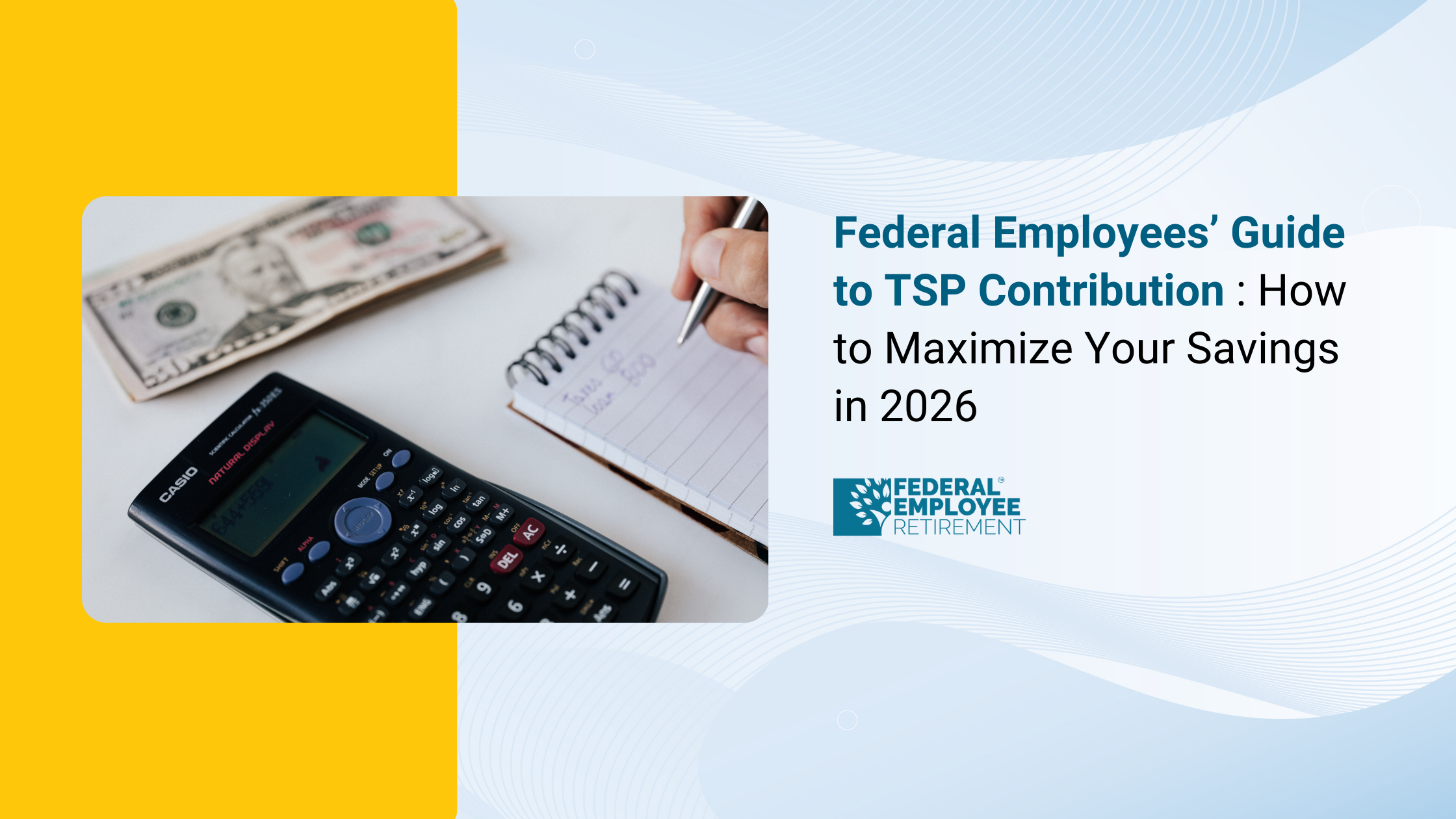
Federal Employees’ Guide to TSP Contribution : How to Maximize Your Savings in 2026
Many federal employees searching for the 2026 TSP contribution limits, a reliable TSP calculator, or the average TSP balance by age are really asking the same question: Am I maximizing my Thrift Savings Plan or just contributing to it?
In 2026, that distinction matters more than ever.
Higher contribution limits, new age-based catch-up tiers, and updated Roth rules mean federal employees can save more than at any point in the program’s history. But they also mean that small execution mistakes contributing too aggressively, mismanaging pay-period elections, or misunderstanding how matching works can quietly cost thousands over time. Even the best TSP calculator or TSP growth calculator can’t fix a strategy that’s set up incorrectly.
To maximize TSP savings in 2026, federal employees need to do more than hit a number. They need to align contribution limits, payroll timing, agency matching, and tax treatment into one coordinated plan.
By the end of this guide, you’ll know exactly how to maximize your TSP savings in 2026, how much to contribute, how to structure it per pay period, and how to avoid the mistakes that cost federal employees the most.
What’s New for TSP Contributions in 2026
Before getting into strategy, it’s important to understand the updated limits that shape every decision in 2026.
For 2026:
- Federal employees under age 50 can contribute up to $24,500
- Employees age 50–59 and 64+ can contribute up to $32,500
- Employees ages 60–63 are eligible for an enhanced maximum of $35,750
These higher limits create more opportunity—but only if contributions are structured correctly throughout the year. There are also new Roth-related rules under SECURE 2.0 that affect higher earners, which makes tax planning more important than in prior years. We’ll flag those where they directly affect maximizing outcomes, without turning this guide into a policy manual.
The key takeaway: 2026 gives you more room to save, but less room for error.

What “Maximizing Your TSP Savings” Actually Means in 2026
Most advice defines “maximizing” your TSP as simply contributing the IRS maximum. In 2026, that definition is incomplete—and often misleading.
Maximizing your TSP savings means optimizing three things at the same time:
- How much you contribute
- When you contribute it
- How those contributions are taxed
If any one of these is misaligned, you’re leaving money on the table—even if you technically “max out.” One of the easiest ways to pressure-test your strategy is to model different contribution levels, pay-period pacing, and tax treatments side by side.
Using a TSP calculator can help you visualize how small changes today affect long-term growth and confirm whether your contribution plan is truly optimized before locking in payroll elections.
The 3 Rules of Maximizing Your TSP in 2026
1: Reach the Highest Contribution Level You Can Sustain
Maximization starts with contribution level, but it shouldn’t be blind. The goal is to contribute as much as your cash flow reasonably allows, up to your age-based limit, while still maintaining flexibility for real-life changes like promotions, step increases, or unexpected expenses.
Catch-up eligibility is based on age and not hire date, and employees who turn 50 during the year are eligible for catch-up contributions for the entire calendar year.
2: Do Not Hit Your Limit Too Early
This is where many high earners make costly mistakes. TSP matching is calculated per pay period. If your contributions stop because you hit the annual limit early, your agency matching can stop as well.
Front-loading contributions may feel aggressive and disciplined, but for federal employees it often reduces total compensation. Maximization requires pacing contributions across the full year.
3: Choose the Right Tax Treatment for Your Contributions
Maximizing savings isn’t just about how much goes into the TSP it’s about how much you keep. Traditional and Roth contributions are taxed differently, and the right choice depends on your income level, career stage, and expected retirement tax picture.
In 2026, higher limits make this decision more impactful than ever.
Most “max your TSP” advice fails because it focuses only on IRS limits. This guide aligns IRS rules, payroll mechanics, agency matching, and tax strategy into one coherent approach.
How to Actually Maximize Your TSP Savings in 2026
This section turns strategy into execution.
Step 1: Identify Your 2026 Maximum Contribution
Start by confirming your age-based limit for 2026. If you turn 50 at any point during the year, you’re eligible for catch-up contributions for the entire year. Employees ages 60–63 should pay special attention to the enhanced catch-up tier, which allows significantly higher savings—but only if payroll elections are set correctly.
Step 2: Spread Contributions Across the Full Year
To protect agency matching, your goal should be to contribute every pay period. This requires knowing whether you have 26 or 27 pay periods in 2026 and dividing your annual target accordingly. Even distribution is usually safer than aggressive front-loading.
Step 3: Set the Correct Per-Pay-Period Contribution
Once you know your annual target and number of pay periods, translate that into a per-pay-period election. Revisit this number after promotions, locality changes, or step increases. Payroll systems don’t optimize for you—they execute exactly what you tell them.
Step 4: Allocate Between Traditional and Roth Intentionally
Decide whether your contributions should be Traditional, Roth, or a blend. Many federal employees benefit from using both, creating tax flexibility in retirement. The right mix depends on whether you expect your tax rate to be higher or lower in the future.

Traditional vs Roth TSP: How This Choice Affects Maximization
Traditional TSP contributions reduce taxable income today but are taxed in retirement. Roth contributions are taxed now but grow and withdraw tax-free.
Traditional contributions may maximize outcomes if you’re in a high tax bracket today, late in your career, or expect a pension-heavy retirement. Roth contributions may be more powerful earlier in your career, during lower-tax years, or if you expect higher future tax rates.
For many federal employees, a blended approach provides the best balance—reducing taxes today while building tax-free flexibility for tomorrow.
For some federal employees, maximizing TSP savings in 2026 may also include converting a portion of existing Traditional TSP balances to Roth especially during lower-income years or before required withdrawals begin. In-plan Roth conversions are a separate decision from ongoing contributions, but when used correctly, they can significantly improve long-term tax efficiency.
If you’re considering this strategy, then read more at TSP Roth Conversion 2026: Everything You Need to Know About In-Plan Conversions. This will walk you through how conversions work, when they make sense, and the key risks to avoid.
Common Mistakes That Prevent Federal Employees From Maximizing Their TSP
Several mistakes show up year after year:
- Hitting the annual limit too early and losing agency matching
- Forgetting catch-up eligibility after turning 50
- Ignoring pay-period math
- Assuming payroll will automatically correct overcontributions
- Failing to adjust elections after raises or promotions
Avoiding these mistakes often matters more than chasing the absolute maximum.
2026 TSP Maximization Checklist
Before the first pay period of 2026, take a few minutes to confirm the fundamentals. These small checks often make the difference between fully maximizing your TSP—and unintentionally leaving money behind.
- Confirm your correct age-based contribution limit for 2026
- Verify the number of pay periods in the year and how your agency processes payroll
- Set your per-pay-period contribution amount to avoid hitting the limit too early
- Ensure your agency matching will last the entire year
- Review your Traditional vs Roth allocation to make sure it aligns with your tax strategy
- Create a plan to recheck elections after promotions, raises, or locality changes
Many of these decisions are best finalized before the end of the prior year. For a detailed breakdown of last-chance deadlines, catch-up eligibility timing, and what must be locked in before January payroll runs,read more at - TSP Guide for December 2025: Final Deadlines & Catch-Up Rules for Federal Employees.
That final review step can prevent rushed decisions and costly mistakes once the 2026 contribution window officially opens.
Final Thoughts: A Smarter Way to Maximize Your TSP in 2026
Maximizing your TSP in 2026 isn’t about guessing, copying a coworker’s contribution percentage, or relying solely on a TSP calculator. It’s about understanding how the rules actually work and aligning those rules with your payroll setup, agency matching, and tax strategy so everything moves in the same direction.
Two federal employees can earn the same salary, contribute the same amount, and still end up with very different outcomes. The difference isn’t access to better tools or higher limits—it’s execution. In 2026, with higher limits and tighter margins for error, the gap between contributing and maximizing has never been more meaningful.
The real advantage isn’t just saving more, it's avoiding the silent mistakes that quietly reduce your long-term retirement outcome.
Even with the right information, translating rules into a payroll-ready, tax-efficient strategy isn’t always straightforward especially if you’re navigating promotions, approaching retirement, managing catch-up contributions, or balancing Traditional and Roth decisions.
If you want confidence that your 2026 TSP strategy is set up correctly from day one, schedule a one-on-one consultation at Federal Pension Advisor. A short conversation now can help ensure you’re not leaving money or opportunities on the table for years to come.
Frequently Asked Questions (FAQs)
1. What is the TSP contribution limit for federal employees in 2026?
For 2026, the TSP employee contribution limit is $24,500 for those under age 50. Federal employees age 50–59 and 64+ can contribute up to $32,500, while those ages 60–63 are eligible for an enhanced limit of $35,750. These limits apply to employee contributions only and do not include agency matching.
2. How can I maximize my TSP contributions without losing agency matching?
To avoid losing agency matching, contributions must be spread across all pay periods in the year. If you hit the annual contribution limit too early, employee contributions stop—and agency matching may stop as well. Maximizing your TSP means pacing contributions correctly, not just contributing aggressively.
3. Is it better to contribute to Traditional or Roth TSP in 2026?
It depends on your current tax bracket, career stage, and expected retirement income. Traditional TSP contributions lower taxable income today, while Roth TSP contributions are taxed upfront but can be withdrawn tax-free in retirement. Many federal employees maximize outcomes by using a combination of both to create tax flexibility later.
4. Can I use a TSP calculator to determine how much I should contribute in 2026?
A TSP calculator can help estimate growth, but it cannot account for payroll mechanics, agency matching rules, or tax strategy. To truly maximize your TSP savings in 2026, you need to combine calculator projections with pay-period planning and contribution timing.
5. What are the most common mistakes federal employees make with TSP contributions?
Common mistakes include hitting the contribution limit too early, misunderstanding catch-up eligibility, failing to adjust contributions after a raise, and assuming payroll systems will automatically optimize matching. These errors can significantly reduce long-term retirement savings.
Disclaimer
This content is for general informational purposes only and should not be considered personalized financial, tax, or legal advice. TSP contribution decisions, tax strategies, and retirement planning outcomes vary based on individual circumstances. Federal employees should consult with a qualified federal benefits or financial advisor before making changes to their Thrift Savings Plan elections or retirement strategy.


Get Updated
Subscribe to our weekly updates for the latest on retirement planning, federal benefits, exclusive webinars, and more!
Download Federal Retirement: Step-by-step Checklist
This comprehensive guide will help you understand your federal benefits, optimize your savings, and plan for a comfortable future.
Recent Post's