

Published
Dec 24, 2025

Last Updated
Sep 1, 2026
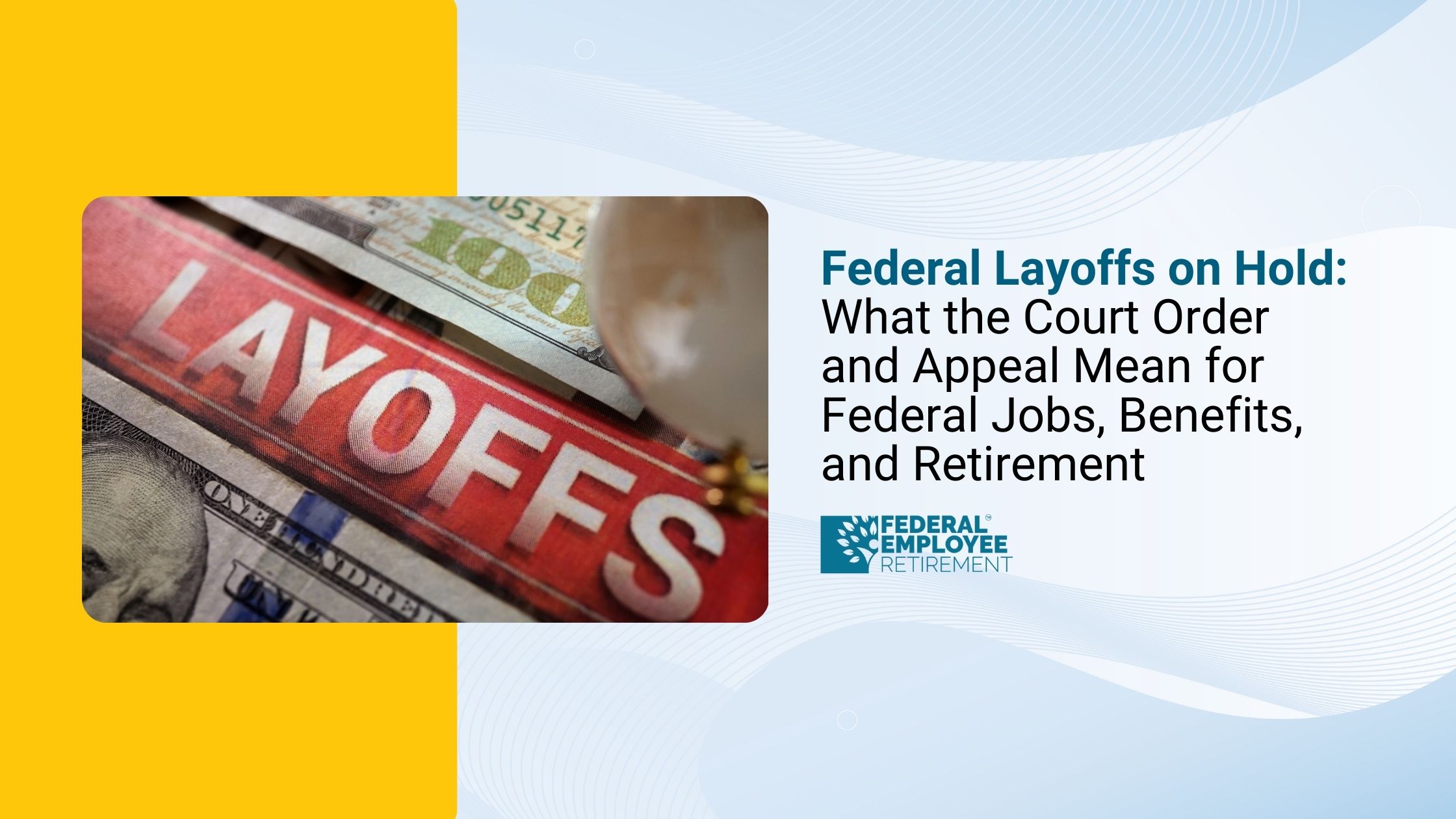
Federal Layoffs on Hold: What the Court Order and Appeal Mean for Federal Jobs, Benefits, and Retirement
In December 2025, a federal judge ordered the Trump administration to temporarily reverse certain reductions in force (RIFs) that led to federal employee layoffs during the recent government shutdown. The ruling affects hundreds of employees who were officially separated and has paused the implementation of those layoffs while the case continues through the courts.
The decision has intensified concerns around federal layoffs, particularly as agencies navigate ongoing budget pressures and workforce restructuring. With an appeal now underway, many federal employees are asking the same questions: What exactly happened? What does this mean for my job and benefits? And how could this affect my retirement?
Questions about federal layoffs have become more urgent in 2025 as agencies continue to manage budget pressures, staffing changes, and workforce reductions. A recent federal court decision has temporarily put certain layoffs on hold, affecting hundreds of federal employees and raising broader concerns about job stability, benefits continuity, and retirement planning.
Why a Federal Judge Ordered Layoffs Reversed
A federal judge recently directed the Trump administration to rescind certain reductions in force (RIFs) that resulted in federal employees being officially separated from their jobs during the recent government shutdown. The order applies to employees who were already laid off and instructs agencies to undo those separations while the case continues.
The ruling potentially affects about 700 federal employees. Importantly, the court did not issue a final judgment on the legality of all federal layoffs. Instead, the order temporarily pauses the impact of specific RIF actions until further legal review is completed.
Why the Layoffs Aren’t Settled Yet
The layoffs are not settled because the federal court’s order is not the final word on the matter. After the judge directed agencies to reverse certain reductions in force, the Department of Justice filed an appeal, moving the case to the Ninth Circuit Court of Appeals.
An appeal means the administration is formally challenging the lower court’s decision and asking a higher court to review it. Until that review is complete, the legal status of the layoffs remains unresolved. In practical terms, the appellate court now has the authority to determine whether the original order should remain in effect while the case proceeds.
As part of the appeal process, the court may:
- Allow the lower court’s order to stand, requiring agencies to continue reversing the affected layoffs for now
- Modify the order, potentially narrowing how it is applied
- Pause or stay the order, which would allow the layoffs to remain in place during the appeal
Because the appeal is ongoing, agencies may be required to take interim actions that could later change depending on the court’s final ruling. This is why some employment outcomes may be temporary and why affected federal employees may experience uncertainty until the appellate process is complete.
In short, the layoffs remain unsettled because the legal process is still underway, and final decisions about reinstatement, separation status, and related benefits depend on how the appeals court rules.
What This Means for Federal Employee’s Job Status
For employees covered by the court order, agencies may be required to temporarily reinstate positions or restore employment status. However, reinstatement during ongoing litigation does not guarantee permanent employment or protection from future workforce actions.
More broadly, this case has renewed government-wide concern about federal layoffs 2025, including questions related to federal layoffs DoD, DoD federal layoffs, and federal layoffs USDA. Employees across agencies are watching closely to understand whether additional reductions could follow.
At this stage, the ruling applies narrowly and should not be interpreted as a blanket halt on all federal layoffs.
For employees following developments related to DoD federal layoffs, additional context on how workforce restructuring is unfolding within the Department of Defense can learn more here - DoD RIF 2025: What Civilian Employees Should Know About the Ongoing Restructuring

How Health Insurance, Leave, and Other Benefits Could Be Impacted
Federal employee benefits are closely tied to official employment status, which is why the court’s order to reverse certain layoffs has implications beyond whether an employee is working or not.
If an employee is temporarily reinstated as a result of the court order, benefits tied to active employment status may be restored, depending on how agencies implement the ruling and process personnel actions. These benefits can include federal health insurance coverage, life insurance, and leave accruals.
According to guidance from the Office of Personnel Management, eligibility for most federal benefits is documented through official personnel actions, such as SF-50s. As a result, how benefits are handled depends on whether a separation is formally reversed and how service dates are ultimately recorded.
Health and Insurance Coverage
For reinstated employees, coverage under programs like FEHB and FEGLI may resume. In some cases, agencies may need to address:
- Gaps in coverage that occurred during the separation
- Retroactive adjustments once employment status is clarified
However, these outcomes are handled on a case-by-case basis and are not automatic.
Leave and Service Time
Reinstatement may also affect:
- Annual and sick leave accruals
- Service computation dates
- Other benefit calculations that rely on continuous service
Whether leave balances or service time are fully restored depends on the final resolution of the case and how agencies document the employee’s status.

Why Documentation Matters
Because benefits determinations rely on finalized personnel records, employees should closely review any updated SF-50s and related documentation. Until the appeal process concludes, some benefit outcomes may remain provisional.
In short, the court order creates the possibility of benefit restoration for affected employees, but final determinations depend on the outcome of the appeal and subsequent agency actions.
How This Is Going To Affect Your Federal Retirement
For many employees, the most significant concern is how layoffs and reinstatements affect retirement under the federal retirement system.
According to guidance from the Office of Personnel Management, federal retirement eligibility and annuity calculations are based on creditable service. Breaks in service—especially those caused by separations can affect:
- Retirement eligibility timelines
- Length of service calculations
- Continuity of retirement coverage
If separations are ultimately reversed, service credit may be restored. If not, gaps in service could have lasting effects, particularly for employees nearing retirement.
Steps Federal Employees Should Consider Right Now
While the legal process continues, federal employees can take practical steps to protect themselves:
- Keep copies of all personnel actions, including SF-50s
- Track separation and reinstatement dates carefully
- Monitor official agency communications for updates
- Avoid making permanent retirement or benefits decisions based on temporary court actions
- Consult agency HR offices or retirement counselors for individualized guidance
These steps are especially important amid ongoing uncertainty around federal workforce reductions.
What This Court Order Does and Does Not Change
To avoid confusion, it’s important to understand the limits of the ruling.
The court order:
- Does not guarantee permanent reinstatement
- Does not eliminate the possibility of future federal layoffs
- Does not create new retirement or benefit entitlements
- Does not resolve all workforce reduction disputes
Final outcomes will depend on appellate decisions and subsequent agency actions.
What to Watch for as the Case Moves Forward
Federal employees should continue to watch for:
- Decisions from the Ninth Circuit
- Agency guidance on how court orders are implemented
- Broader policy signals related to staffing and workforce planning
This case highlights how legal challenges can temporarily affect employment outcomes—but may not settle them permanently.
Final Thoughts
The court order placing certain federal layoffs on hold provides temporary clarity, but it does not remove uncertainty. What this situation makes clear is that employment status, benefits, and retirement outcomes are closely connected—and depend on finalized legal and personnel decisions.
For federal employees affected by the ruling, or for those watching broader workforce developments, understanding what has happened, what is still under review, and how it may affect jobs, benefits, and retirement is essential. While the appeal process continues, outcomes may change, and interim actions taken by agencies could later be modified.The most effective step employees can take right now is to stay informed and proactive.
For clear, up-to-date explanations on federal workforce changes, benefits, and retirement planning, Book A Consultation, where we break down complex developments into practical guidance designed specifically for federal employees. Staying connected to reliable, employee-focused resources can help you make informed decisions with confidence as situations evolve.
Frequently Asked Questions
1. Does this court order mean federal layoffs are permanently stopped?
No. The court order temporarily pauses certain layoffs while the case is under appeal. It does not permanently stop all federal layoffs or prevent agencies from taking future workforce actions once the legal process is complete.
2. Who is affected by this ruling?
The ruling applies only to federal employees who were officially separated as part of the specific reductions in force challenged in court. It does not apply to all agencies or all federal employees.
3. Will affected employees automatically get their jobs and benefits back?
Not automatically. Some employees may be temporarily reinstated, but outcomes depend on how agencies implement the court order and how the appeal is resolved. Final employment and benefit determinations are tied to official personnel actions.
4. How could this situation affect my federal retirement?
Retirement under the federal retirement system is based on creditable service. If a separation is ultimately reversed, service credit may be restored. If not, a break in service could affect retirement eligibility or timing—especially for employees close to retirement.
5. Will there be more federal layoffs in 2025?
At this point, it is unclear. The court order applies narrowly and does not rule out future layoffs. Workforce decisions will continue to depend on agency budgets, staffing needs, and policy direction. Employees should monitor official communications for updates.
Content Disclaimer
This article is for educational and informational purposes only and is not intended as legal, tax, or individualized retirement advice. Federal retirement rules are complex and subject to legislative and regulatory change. Individual outcomes depend on factors such as age, length of service, retirement type, earnings, and benefit elections. Federal employees should consult with a qualified federal retirement or financial professional before making retirement or employment decisions.
Content Refference
- Office of Personnel Management
- Ninth Circuit Court of Appeals
- Department of Justice


Get Updated
Subscribe to our weekly updates for the latest on retirement planning, federal benefits, exclusive webinars, and more!
Download Federal Retirement: Step-by-step Checklist
This comprehensive guide will help you understand your federal benefits, optimize your savings, and plan for a comfortable future.
Recent Post's