Federal Retirement Planning Blog
453 guides on FERS, TSP, FEHB, Social Security and federal benefits — updated as rules change.
Jun 8, 2026
IRS Layoffs 2026: What Federal Employees Should Know About Retirement, RIFs, and Buyout Options
IRS layoffs in 2026 are part of a broader IRS workforce reduction that began in 2025, with additional staffing cuts still proposed in later budget documents.
Read More
Jun 5, 2026
Schedule Policy/Career 2026: What Federal Employees Should Know Before Retirement
Schedule Policy/Career 2026 is a new excepted-service employment category that reduces standard civil service removal protections for certain policy-influencing federal jobs. It makes removal easier than under standard competitive-service rules.
Read More
Jun 4, 2026
FEHB Family Member Eligibility Rules 2026: What Federal Employees and Retirees Need to Know
Under the FEHB family member eligibility rules 2026, only your spouse and children under age 26, including biological, adopted, step, and foster children, qualify as covered family members on your Federal Employees Health Benefits (FEHB) plan.
Read More
Jun 3, 2026
Forest Service VERA and VSIP 2026: What Employees Should Know Before Taking a Separation Incentive
If you're a U.S. Forest Service employee weighing a separation incentive in 2026, here's the direct answer. VERA (Voluntary Early Retirement Authority) and VSIP (Voluntary Separation Incentive Payment) are two distinct offers that can let you leave federal service early. VERA lets eligible employees retire early on an immediate annuity. VSIP pays a one-time lump sum capped at $25,000.
Read More
Jun 2, 2026
How Many Federal Workers Were Cut in 2026?
The latest full-year data shows that more than 300,000 federal employees left government service during 2025. After new hires are counted, that produced a net federal workforce reduction of roughly 238,000 positions, according to the Office of Personnel Management (OPM) and an analysis by the Pew Research Center.
Read More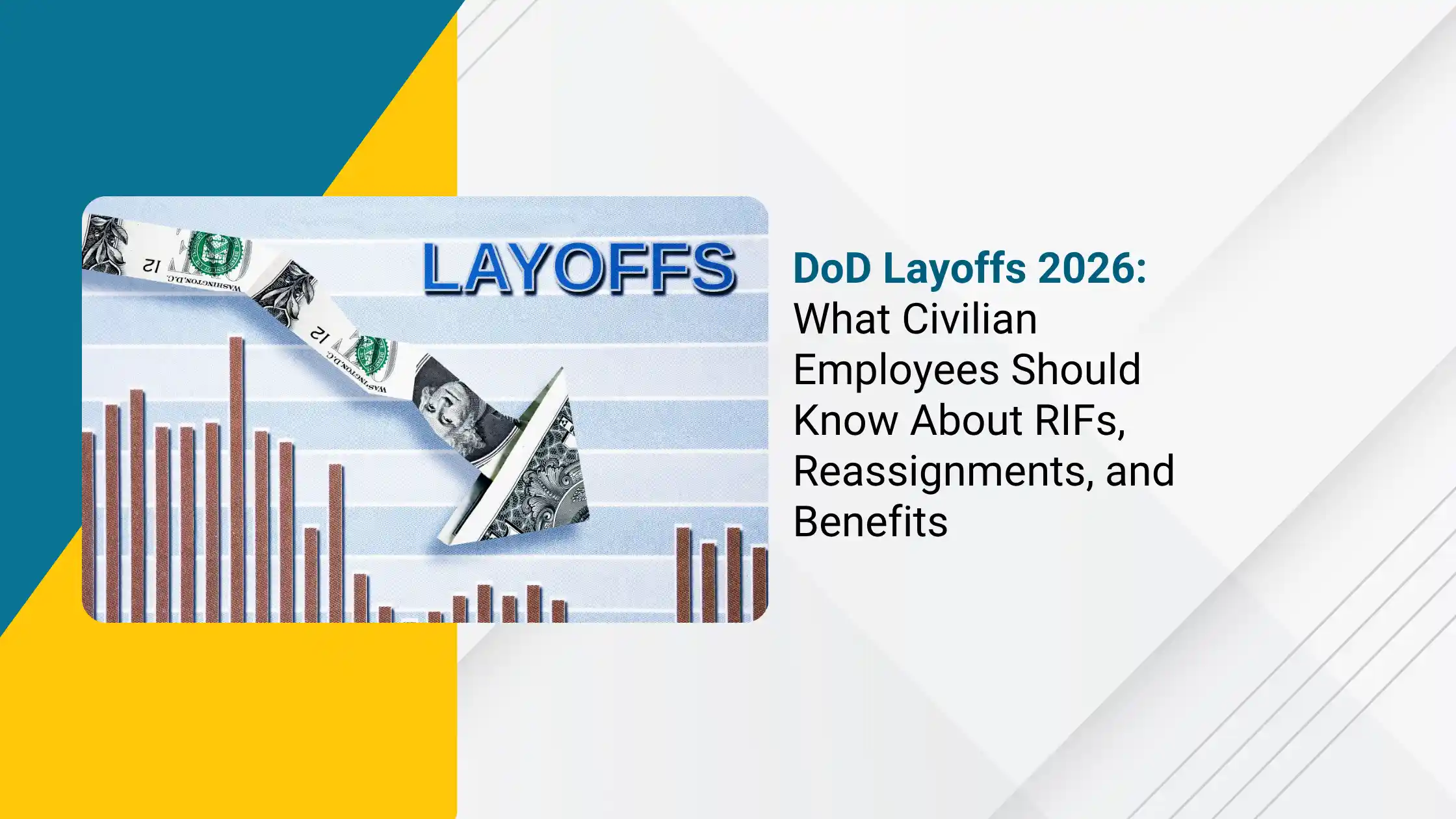
Jun 1, 2026
DoD Layoffs 2026: What Civilian Employees Should Know About RIFs, Reassignments, and Benefits
DoD civilian workforce reductions have continued in 2026 through deferred resignation, restructuring, hiring limits, reassignments, and possible Reduction in Force (RIF) actions.
Read More
May 29, 2026
TSP In-Plan Roth Conversion 2026: Rules, Taxes, and When It Makes Sense
A TSP in-plan Roth conversion moves money from your traditional TSP balance directly into your Roth TSP balance without taking the money out of the plan. You pay ordinary income tax now. In return, you get tax-free growth and tax-advantaged withdrawals later.
Read More
May 28, 2026
Deferred Resignation Program Explained for Federal Employees
The Deferred Resignation Program (DRP) was a federal workforce buyout offered to certain federal employees in early 2025, sometimes called the "Fork in the Road" offer.
Read More
May 27, 2026
TSP Catch-Up Contributions 2026: Roth Rule, Limits, and Key Changes from 2025
TSP catch-up contributions are additional retirement savings amounts that federal employees aged 50 and older can contribute to the Thrift Savings Plan beyond the standard elective deferral limit. In 2026.
Read More
May 26, 2026
7 Common Thrift Savings Plan Problems Federal Employees Should Fix Before Retirement
Thrift Savings Plan problems are the gaps, errors, and outdated choices in a federal employee's TSP account that quietly reduce retirement income if left unfixed before separation. These include wrong fund allocations, missed catch-up contributions, outdated beneficiary forms, untracked loans, and uncoordinated withdrawal strategies.
Read More
May 25, 2026
How Many TSP Millionaires Are There in 2026? What Federal Employees Can Learn From Them
As of early 2026, roughly 185,000 to 195,000 TSP accounts held balances of $1 million or more, depending on the reporting date. Public reporting cited approximately 194,722 million-dollar TSP accounts as of January 1, 2026.
Read More
May 22, 2026
FEHB Premium Increase 2026: What Federal Employees Need to Know
According to the U.S. Office of Personnel Management, the average FEHB premium increase for 2026 is 10.2% overall. The average enrollee share is increasing by 12.3%, while the average government contribution is increasing by 9.2%.
Read More
May 21, 2026
Federal Retirement Checklist: What FERS Employees Should Review Before Retirement
A federal retirement checklist is a structured pre-retirement review covering the seven core areas every FERS employee must verify before separating from service: eligibility, the annuity calculation, TSP strategy,
Read More
May 20, 2026
TSP Rollover to Fidelity: How to Roll Over Your TSP Without Tax Mistakes
A TSP rollover to Fidelity moves your retirement balance from the Thrift Savings Plan, the federal government's tax-advantaged retirement savings program, into a Fidelity Individual Retirement Account (IRA).
Read More
May 19, 2026
OPM Proposed RIF Rules: What Federal Employees Should Review Before Retirement Is Affected
OPM proposed RIF rules are amendments to the federal Reduction in Force regulations issued by OPM, the U.S. Office of Personnel Management, that would change how agencies select, notify, and place employees during workforce reductions.
Read More
May 18, 2026
FERS Pension Tax Rules 2026 What Federal Retirees Should Know
Yes, federal retirement is generally taxable in 2026. FERS, the Federal Employees Retirement System, pensions are subject to federal income tax on the portion of each annuity payment that represents the government's contributions and accumulated earnings.
Read More
May 15, 2026
Federal Retirement Tax 2026: What FERS Employees Need to Know Before They Retire
The federal retirement tax 2026 framework requires FERS retirees to pay ordinary federal income tax on their FERS annuity, traditional TSP withdrawals, and up to 85% of Social Security benefits. A small portion of each annuity payment representing previously taxed contributions is recovered tax-free under the IRS Simplified Method.
Read More
May 14, 2026
FERS Retirement Planning Guide 2026: How to Calculate Your FERS Pension and Avoid Costly Mistakes
FERS retirement planning is the process of coordinating your three-part federal retirement income (the FERS basic annuity, the Thrift Savings Plan, and Social Security) so they pay out at the right ages, in the right order, and with the right tax treatment.
Read More
May 13, 2026
Roth TSP vs Traditional TSP: Which Is Better for Federal Employees in 2026?
The choice between Roth TSP vs traditional TSP comes down to one question: do you want to pay taxes now or in retirement? Roth TSP contributions are made with after-tax dollars and grow tax-free.
Read More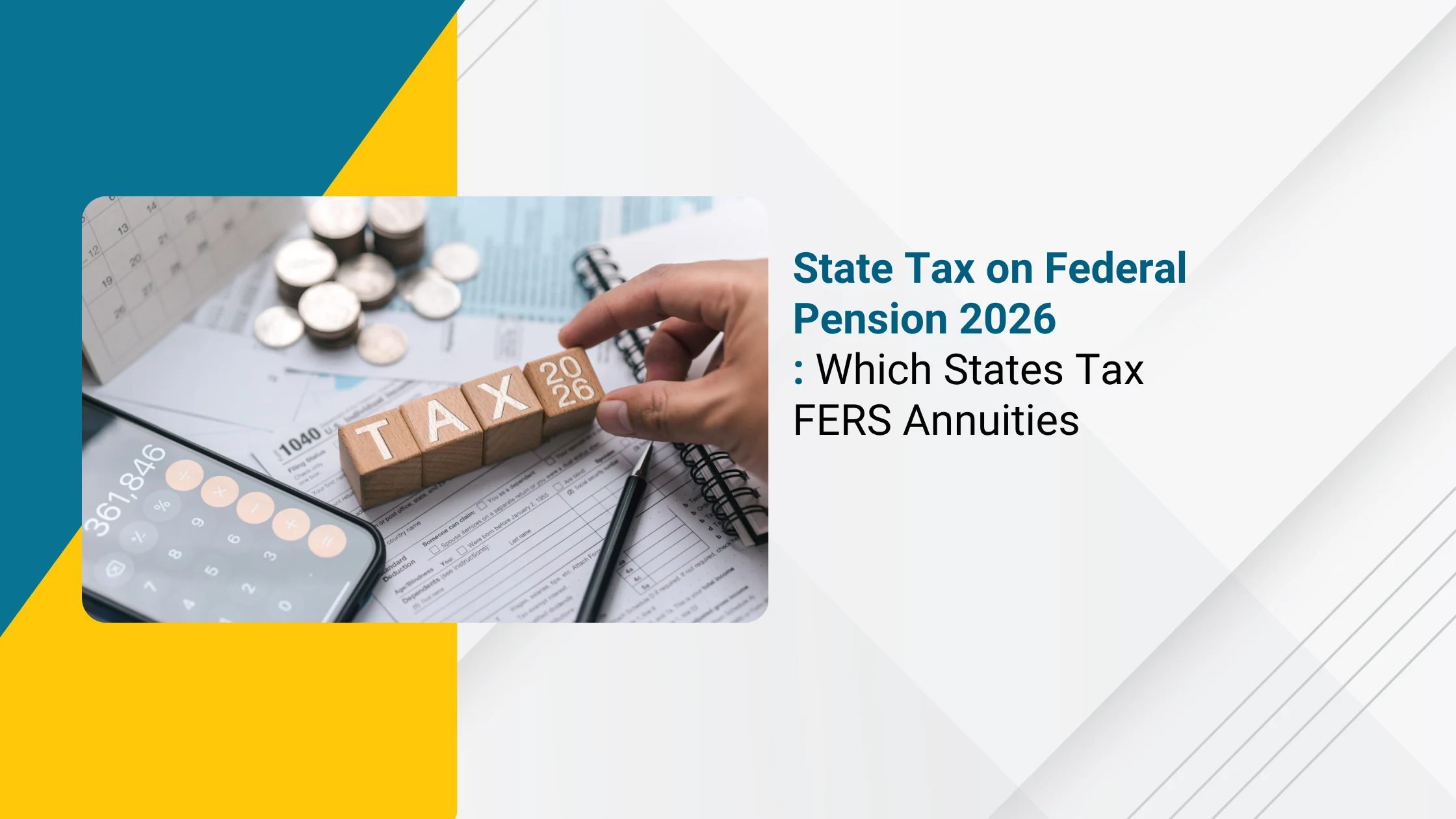
May 12, 2026
State Tax on Federal Pension 2026: Which States Tax FERS Annuities
State tax on federal pension 2026 rules vary widely. Some states don't tax federal pension income because they have no broad-based personal income tax, while others specifically exempt qualifying federal civil-service annuities.
Read More
May 11, 2026
Pension vs Retirement Plan: What Is the Difference?
The difference between a pension and a retirement plan is that a pension is one specific type of retirement plan, a defined benefit plan that provides a formula-based monthly income in retirement, funded primarily by the employer and subject to vesting, eligibility, and plan rules.
Read More
May 8, 2026
What Is a Retirement Plan Distribution? Rules and Tax Considerations
A retirement plan distribution is any payout of money from a tax-advantaged retirement account, such as a 401(k), IRA, or the TSP (Thrift Savings Plan), the federal government's tax-advantaged retirement savings program.
Read More
May 7, 2026
What Is a Retirement Plan? Types and How It Works
A retirement plan is a financial arrangement that lets workers set aside money during their working years so they have income after they stop working. Most retirement plans offer tax advantages, employer contributions, or both. They fall into two broad categories: defined benefit plans, which pay a guaranteed monthly amount, and defined contribution plans, which build a balance the worker draws from in retirement.
Read More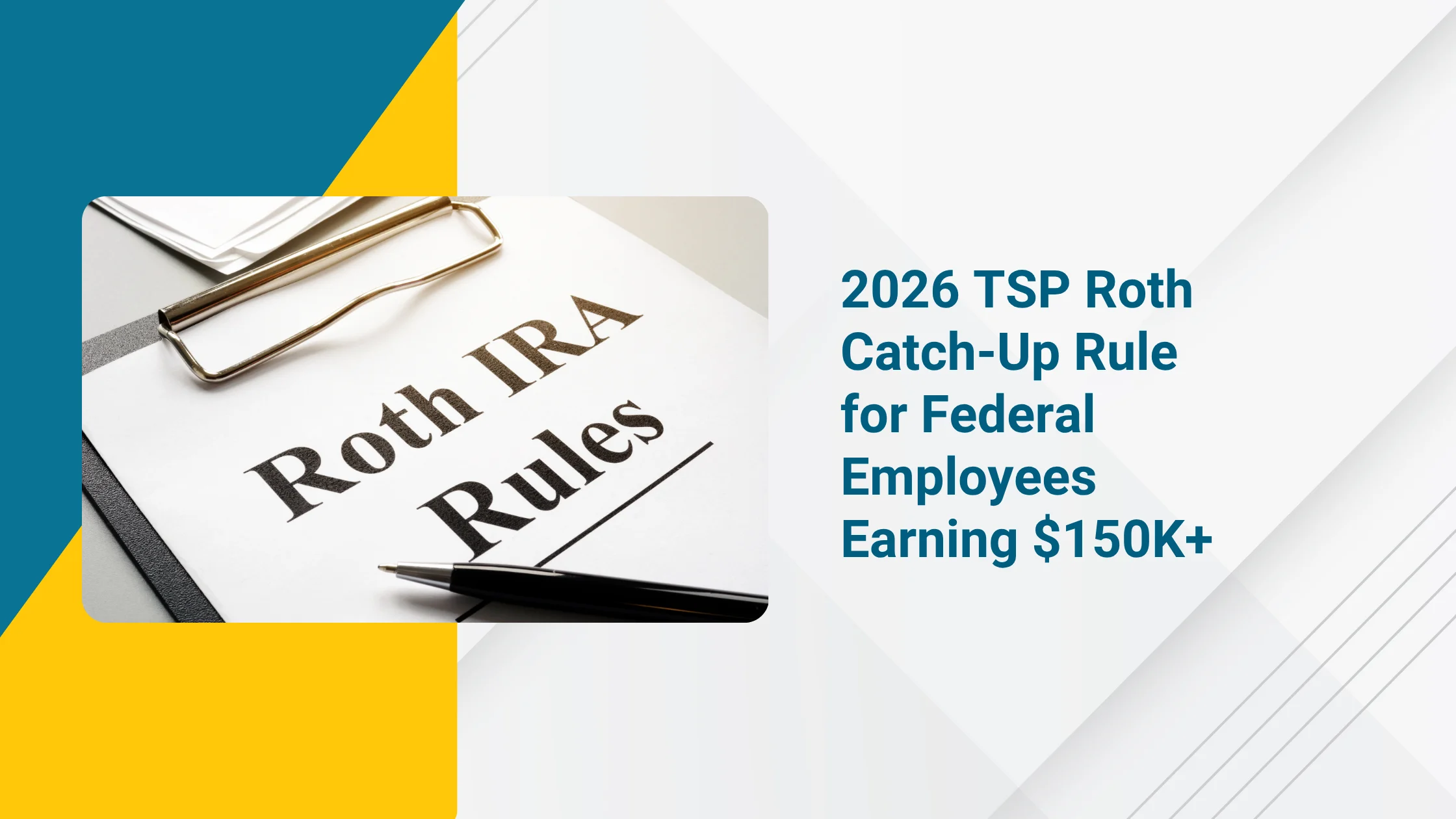
May 6, 2026
2026 TSP Roth Catch-Up Rule for Federal Employees Earning $150K+
The Roth catch-up rule 2026 requires federal employees age 50 and older who earned more than $150,000 in FICA (Federal Insurance Contributions Act) wages from their employing agency in the prior calendar year to make all catch-up contributions to the TSP, or Thrift Savings Plan, the federal government's tax-advantaged retirement savings program, on a Roth (after-tax) basis rather than traditional pre-tax.
Read More
May 5, 2026
G Fund vs C Fund TSP: How Allocation Choices Affect Growth and Risk
The G Fund vs C Fund TSP decision comes down to one trade-off: stability versus growth. The G Fund, or Government Securities Investment Fund, protects principal. The C Fund, or Common Stock Index Investment Fund, gives you exposure to large U.S. companies through the S&P 500.
Read MoreTurn what you read into a plan — free call.
Free 30-minute call with an independent, licensed professional in your state. No obligation.
★★★★★ Reviews on Google & TrustpilotSpouses welcome