


Published
Mar 30, 2026

Last Updated
Sep 1, 2026
Think Tenure Protects You? Proposed Federal RIF Rule May Prioritize Performance Over Seniority
In March 2026, the Office of Personnel Management introduced a significant update through the OPM Proposed Rule March 2026, signaling a potential shift in how reduction in force federal government actions are evaluated.
Traditionally, federal layoffs have followed a structured system where career seniority, tenure, and veterans’ preference heavily influence retention decisions. However, recent federal RIF updates suggest that performance may play a more prominent role in future workforce reductions.
For federal employees, this raises a critical question:
Can senior federal employees be laid off if performance becomes a primary factor?
Understanding how these proposed changes could reshape federal employee job security is essential especially for those nearing retirement or relying on long-term career stability.
What Is Changing in Federal RIF Rules?
The proposed changes do not eliminate the existing RIF framework, but they indicate a shift in how employees may be evaluated within it.
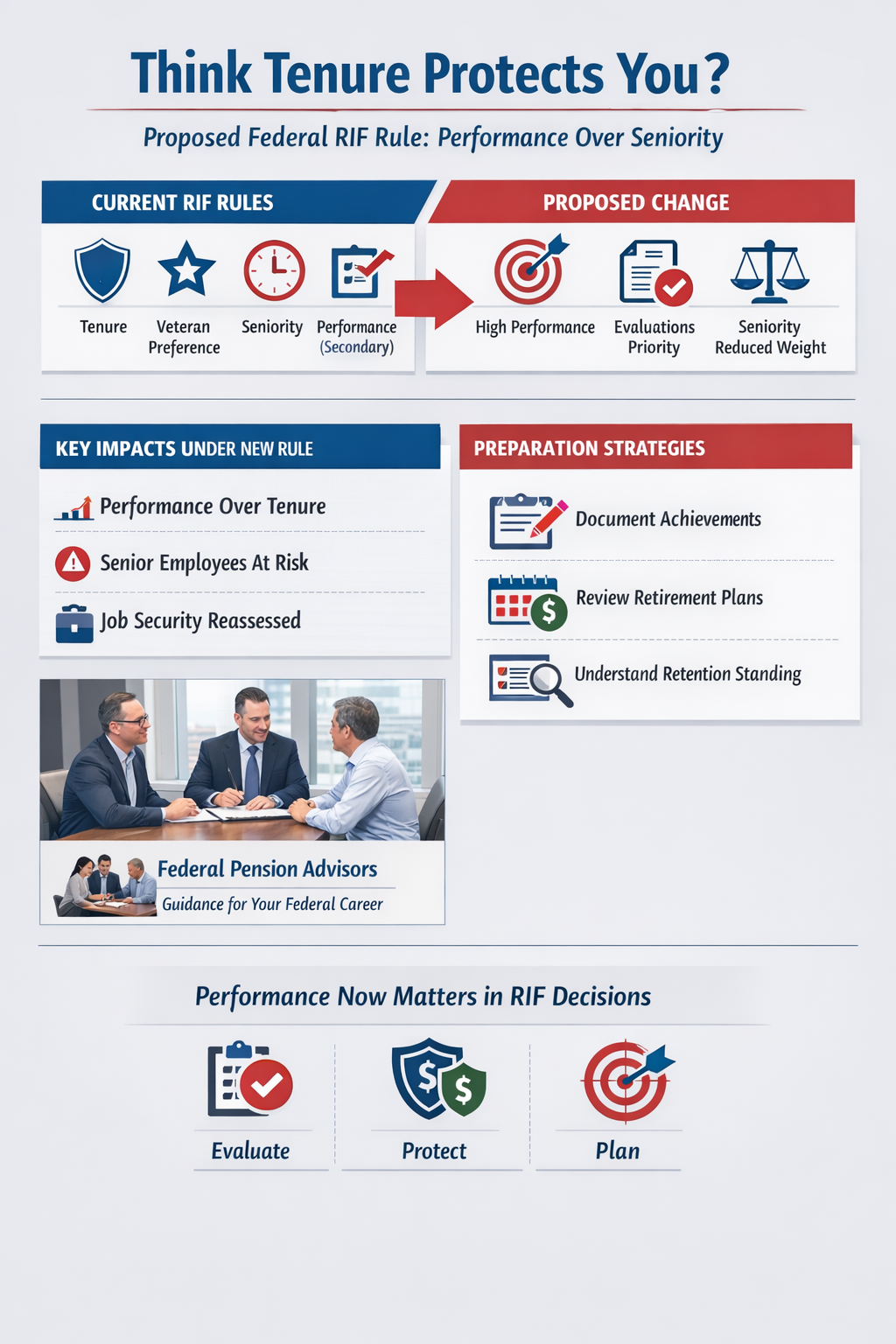
Under current rif federal government rules, retention is primarily determined by:
- Tenure group (permanent vs temporary)
- Veterans’ preference
- Length of service (career seniority)
- Performance ratings (as a secondary factor)
The Federal Reduction in Force changes being discussed would increase the weight of performance personnel evaluations, particularly through structured review systems such as the high performance cycle.
Why This Matters
This signals a move from a tenure-dominant system toward a performance-sensitive model, especially in competitive levels where employees have similar tenure and service history.
What Is Seniority and How Has It Traditionally Worked?
In the federal system, seniority goes beyond simple years of service. It reflects an employee’s career seniority, including:
- Total creditable federal service
- Position within tenure groups
- Retention standing within a competitive level
Historically, this structure has provided strong protection. Employees with longer service typically rank higher in retention order, making them less likely to be separated during a RIF.
However, if performance vs tenure federal layoffs becomes a defining factor, this long-standing advantage may weaken in certain scenarios.
Could Performance Now Outweigh Tenure?
The emerging focus on performance over seniority RIF does not mean tenure becomes irrelevant but it does mean it may no longer be sufficient on its own.
If performance is becoming a bigger factor, understanding where you stand is critical. Speak with a federal retirement advisor to evaluate your position and plan your next steps with confidence.
Where Performance Could Matter More
- When employees fall within the same tenure and veterans’ preference group
- When service length differences are minimal
- When agencies emphasize measurable outcomes and accountability
In these situations, performance personnel data, including appraisal ratings and contribution levels, may increasingly influence final decisions.
Key Insight
Tenure may still determine your position but performance could now determine your outcome.

Can Senior Federal Employees Be Laid Off?
Yes under both current and proposed frameworks, senior federal employees can be laid off, though historically it has been less likely.
The proposed Federal employee layoff rules 2026 reinforce that:
- Seniority alone does not guarantee protection
- Lower performance ratings may reduce retention standing within a group
- Agencies may prioritize workforce efficiency alongside tenure
This does not eliminate protections, it changes how they are applied.
How This Affects Federal Employee Job Security
For many employees, especially those mid-career or nearing retirement, these changes introduce a shift in how federal employee job security should be evaluated.
Previously, long service often translated into predictable protection. Under a performance-influenced model:
- Consistent performance becomes more critical
- Ratings history may carry greater long-term impact
- Career strategy must account for both tenure and performance
This is particularly relevant in environments undergoing 2026 Federal Workforce Cuts, where agencies may be under pressure to justify retention decisions more rigorously.
Federal Layoffs Impact on Retirement Planning
One of the most overlooked aspects of a reduction in federal government action is its impact on retirement timing and income.
Key Considerations
- Early retirement eligibility (DSR) may become an option
- Loss of expected service years can affect pension calculations
- Timing of separation can impact high-3 salary averages
- TSP contribution timelines may be shortened
For employees close to retirement, even a small shift in timing can materially affect long-term financial outcomes.

How to Prepare for a Federal RIF in 2026
Preparation is no longer just about tenure; it requires a broader approach.
Practical Steps
- Review your performance history: Ensure ratings accurately reflect your contributions
- Understand your retention standing: Know where you fall within your competitive level
- Strengthen documentation: Maintain records of achievements and impact
- Evaluate retirement readiness: Assess eligibility and financial position
- Monitor policy developments: Track updates tied to federal RIF updates and agency-level changes
Strategic Insight
Preparation is no longer passive. In a performance-sensitive system, your documented value matters as much as your years of service.
What This Means for the Future of Federal Workforce RIFs
The shift toward integrating performance into RIF decisions reflects broader changes in federal workforce management.
Agencies are increasingly focused on:
- Efficiency and accountability
- Measurable outcomes
- Workforce optimization
Agencies are increasingly focused on efficiency, accountability, and measurable outcomes, which is also evident in how federal workforce RIF rules, rights, and next steps are being redefined in the current policy environment. While tenure and structure remain central, the direction of policy suggests that performance will play a more active role in shaping retention decisions.
Final Thoughts
The proposed Federal Reduction in Force changes represent more than a policy adjustment; they signal a shift in how federal careers may be evaluated during periods of workforce reduction.
Tenure and structure will continue to matter, but they may no longer provide the same level of protection on their own. As performance becomes more visible in retention decisions, federal employees must adapt by focusing on both career longevity and measurable contribution.
In this evolving environment, preparation is no longer optional. It is the difference between reacting to change and managing it with clarity and control.
FAQs
What is a RIF in the federal government?
A RIF is a structured process used to reduce the federal workforce due to budget cuts, reorganization, or lack of work.
What is seniority in federal employment?
Seniority refers to an employee’s length of service and position within retention groups, which historically influenced RIF outcomes.
Are federal RIF rules changing in 2026?
Yes, proposed updates under the OPM Proposed Rule March 2026 suggest performance may carry more weight alongside traditional factors.
Does performance matter in federal layoffs?
Performance has always been a factor, but new proposals indicate it may become more influential in determining retention.
How can I prepare for a federal RIF?
Focus on performance documentation, understand your retention standing, and evaluate your retirement readiness.


Get Updated
Subscribe to our weekly updates for the latest on retirement planning, federal benefits, exclusive webinars, and more!
Download Federal Retirement: Step-by-step Checklist
This comprehensive guide will help you understand your federal benefits, optimize your savings, and plan for a comfortable future.
Recent Post's