Federal Retirement Planning Blog
453 guides on FERS, TSP, FEHB, Social Security and federal benefits — updated as rules change.
Nov 11, 2026
2027 Federal Pay Uncertainty: How Should Employees Adjust Their Retirement Planning?
2027 federal pay uncertainty refers to the unresolved question of whether civilian federal employees will get a pay raise, a freeze, or something in between when the new year begins. As of November 2026, the leading planning scenario is a freeze.
Read More
Nov 10, 2026
Your Agency Says You Owe Thousands in FERS Contributions. Can You Challenge the Debt?
Yes, you can challenge a FERS contribution debt. When your agency sends a letter demanding back contributions to the Federal Employees Retirement System (FERS), federal law generally gives you three options. You can repay the debt, request a hearing to contest its validity or amount, or apply for a waiver under 5 U.S.C. § 5584.
Read More
Nov 5, 2026
Can a Federal Employee Union Still Take Your Grievance to Arbitration?
For federal employees at agencies covered by Chapter 71 of Title 5 that have an applicable collective bargaining agreement (CBA) in force, the answer is yes. The union can invoke binding arbitration under 5 U.S.C. § 7121 as it always has, provided the grievance is not one of the statutory matters excluded from that process.
Read More
Nov 4, 2026
Federal Employees Retiring in 2026: What to Do Before Year-End
Federal employees retiring in 2026 need to complete five actions before year-end. Each decision affects monthly income, health coverage, or 2026 tax liability. First, confirm your continuous Federal Employees Health Benefits (FEHB) enrollment under OPM's actual eligibility rules. Second, make your 2027 health plan elections during Open Season
Read More
Nov 3, 2026
Federal Retirement in 2027: What 2026 Changes Should You Factor Into Your Plan?
Five concrete 2026 changes shape federal retirement in 2027, and you should factor them into your plan. These include a 2.6% FERS cost-of-living adjustment (COLA), a $24,500 Thrift Savings Plan (TSP) elective deferral limit, and a new mandatory Roth catch-up rule for employees whose 2025 Social Security wages exceeded $150,000.
Read More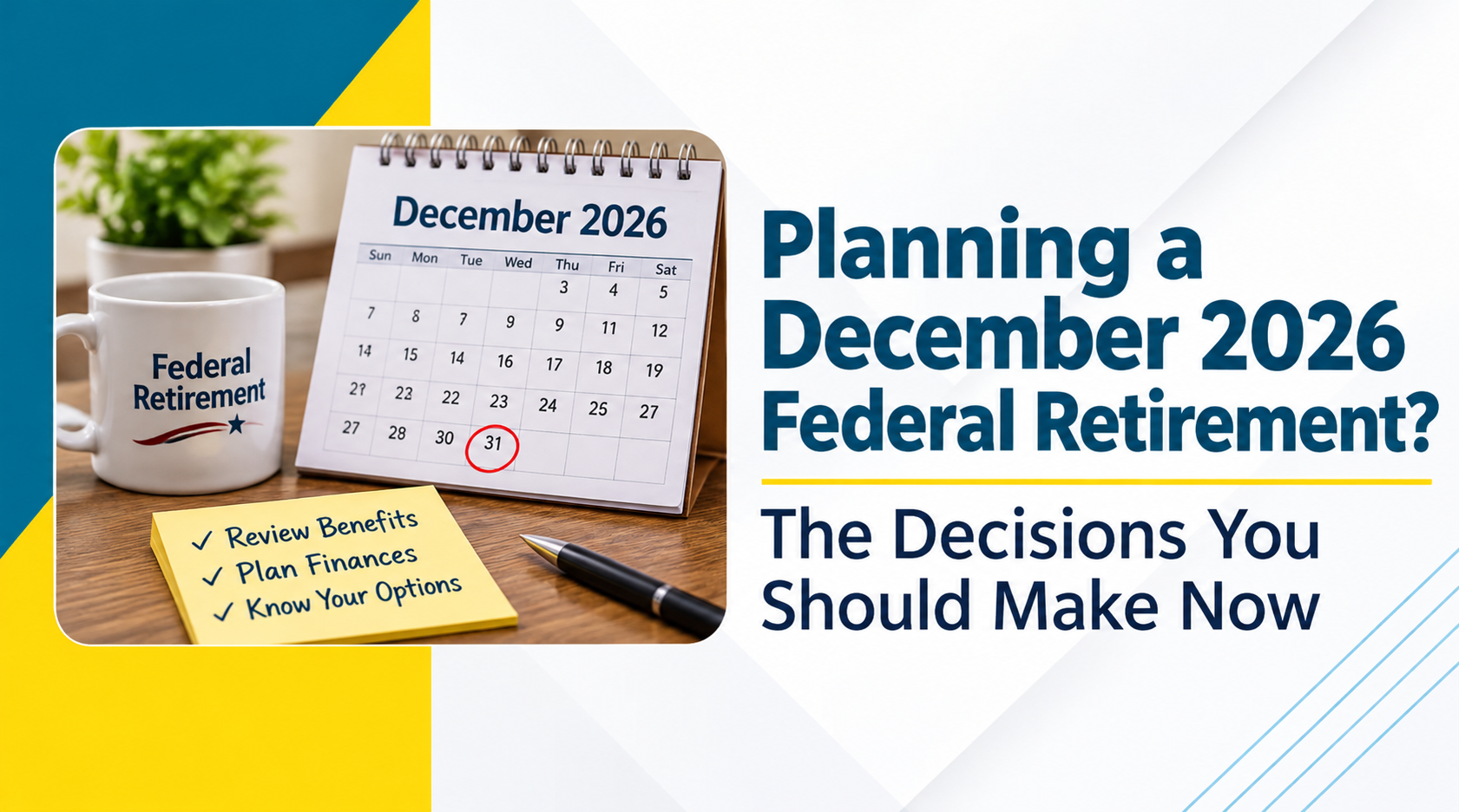
Nov 2, 2026
Planning a December 2026 Federal Retirement? The Decisions You Should Make Now
Planning a December 2026 federal retirement means making six time-sensitive decisions in the next few weeks. Those six decisions are: locking in your exact retirement date, choosing your 2027 Federal Employees Health Benefits (FEHB) coverage before Open Season closes December 14, 2026, finalizing your 2026 Thrift Savings Plan (TSP) contributions, verifying your service record with the U.S. Office of Personnel Management (OPM), planning for the income gap before your first full annuity check, and confirming your Social Security, survivor, and life insurance elections.
Read More
Oct 30, 2026
Federal Retirement Income in 2027: How FERS, TSP, Social Security and FEHB Fit Together
Federal retirement income in 2027 comes from four moving parts: your FERS pension, your TSP savings, Social Security, and FEHB health coverage. The choices you make about each one affect what the others pay out.
Read More
Oct 29, 2026
2027 FEHB Self Only vs. Self Plus One vs. Self and Family: Which Enrollment Tier Costs Less?
For most federal employees, comparing 2027 FEHB Self Only vs. Self Plus One vs. Self and Family, Self Only is the cheapest tier. Self Plus One is the middle option for two-person households. Self and Family is the most expensive for groups of three or more.
Read More
Oct 28, 2026
Retiring After a Federal Workforce Change: What Happens to Your Retirement Strategy?
A federal workforce change can take several forms: a reduction in force, an early-out offer, a reorganization, or a transfer of function. When one lands on your desk, the question that follows is almost always the same: what happens to your retirement strategy?
Read More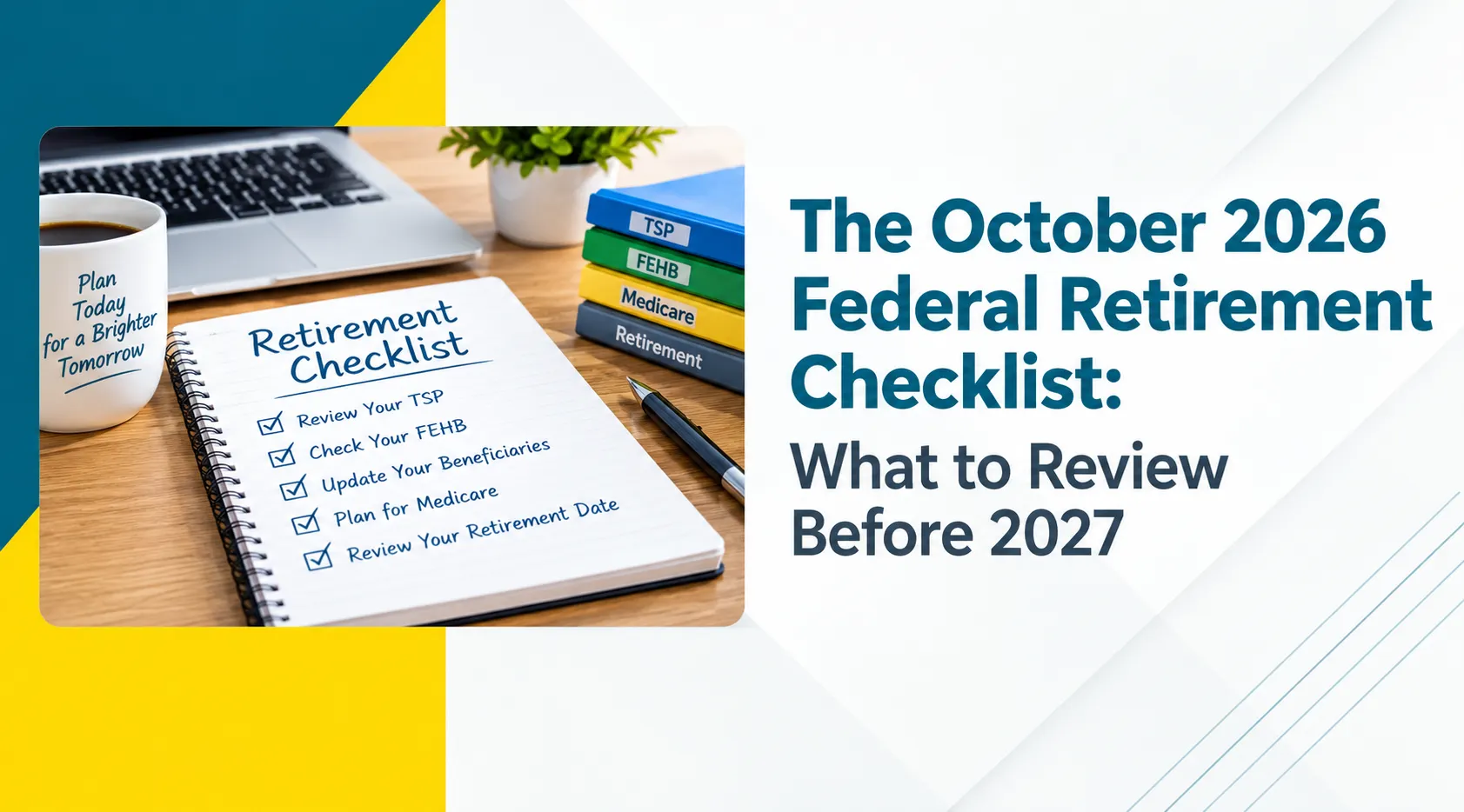
Oct 27, 2026
The October 2026 Federal Retirement Checklist: What to Review Before 2027
Before 2027, federal employees and annuitants should complete an end-of-year review between October and December 2026. The goal: lock in benefit, tax, and estate decisions before the January 2027 plan year starts.
Read More
Oct 26, 2026
OPM Retirement Backlog Falls Below 10,000: What This Means for Federal Retirement Applications
The OPM retirement backlog fell to 8,814 pending claims in September 2026, its lowest level since at least 2012. That figure comes from FedSmith's analysis of the monthly report published by OPM, the U.S. Office of Personnel Management. The pending inventory sits roughly 32% below OPM's long-standing steady-state goal of 13,000 claims.
Read More
Oct 23, 2026
Retiring in 2027? Why Your Retirement Date Could Matter More Than You Think
Retiring in 2027? Your separation date can affect your retirement income in ways that are easy to overlook. 2027 is landing in an unusual combination of a proposed federal civilian pay freeze, a split Cost-of-Living Adjustment (COLA) between the two main federal retirement systems, projected but not yet official Thrift Savings Plan (TSP) contribution increases, another above-average Federal Employees Health Benefits (FEHB) premium increase, and ongoing legislative discussion about the FERS Annuity Supplement.
Read More
Oct 23, 2026
TSP Funds Fell in September 2026: What Federal Employees Should Consider Now
TSP funds fell in September 2026 across every core investment option except one. According to data published on TSP.gov and reported by Government Executive, the Thrift Savings Plan's (TSP) S Fund dropped 3.86%, the F Fund fell 2.59%, the I Fund slid 2.30%, and the C Fund finished 0.35% in the red. The G Fund posted a monthly return of 0.40%, the only core fund to gain ground.
Read More
Oct 22, 2026
OPM Retirement Backlog Nears Steady-State Goal: What This Means for Federal Retirement Applications
The OPM retirement backlog has fallen to its lowest level since the current surge began in late 2025. The queue is now within reach of the agency’s long-stated steady-state goal of 13,000 pending claims.
Read More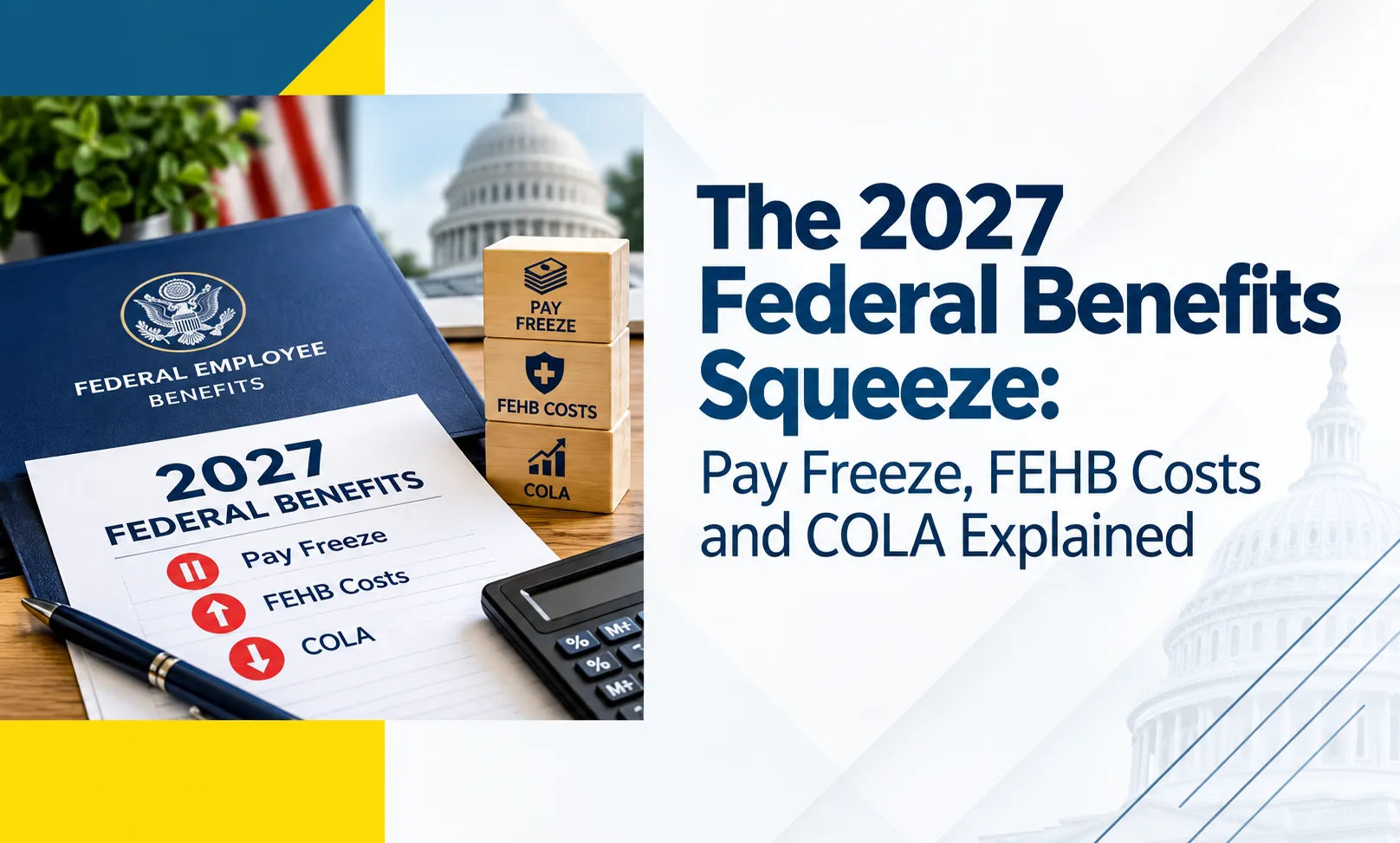
Oct 22, 2026
The 2027 Federal Benefits Squeeze: Pay Freeze, FEHB Costs and COLA Explained
FEHB costs and COLA explained: if you're a federal employee or retiree, you face three issues heading into 2027. First, under the announced 2027 pay plan, base and locality pay are frozen for most covered civilian employees.
Read More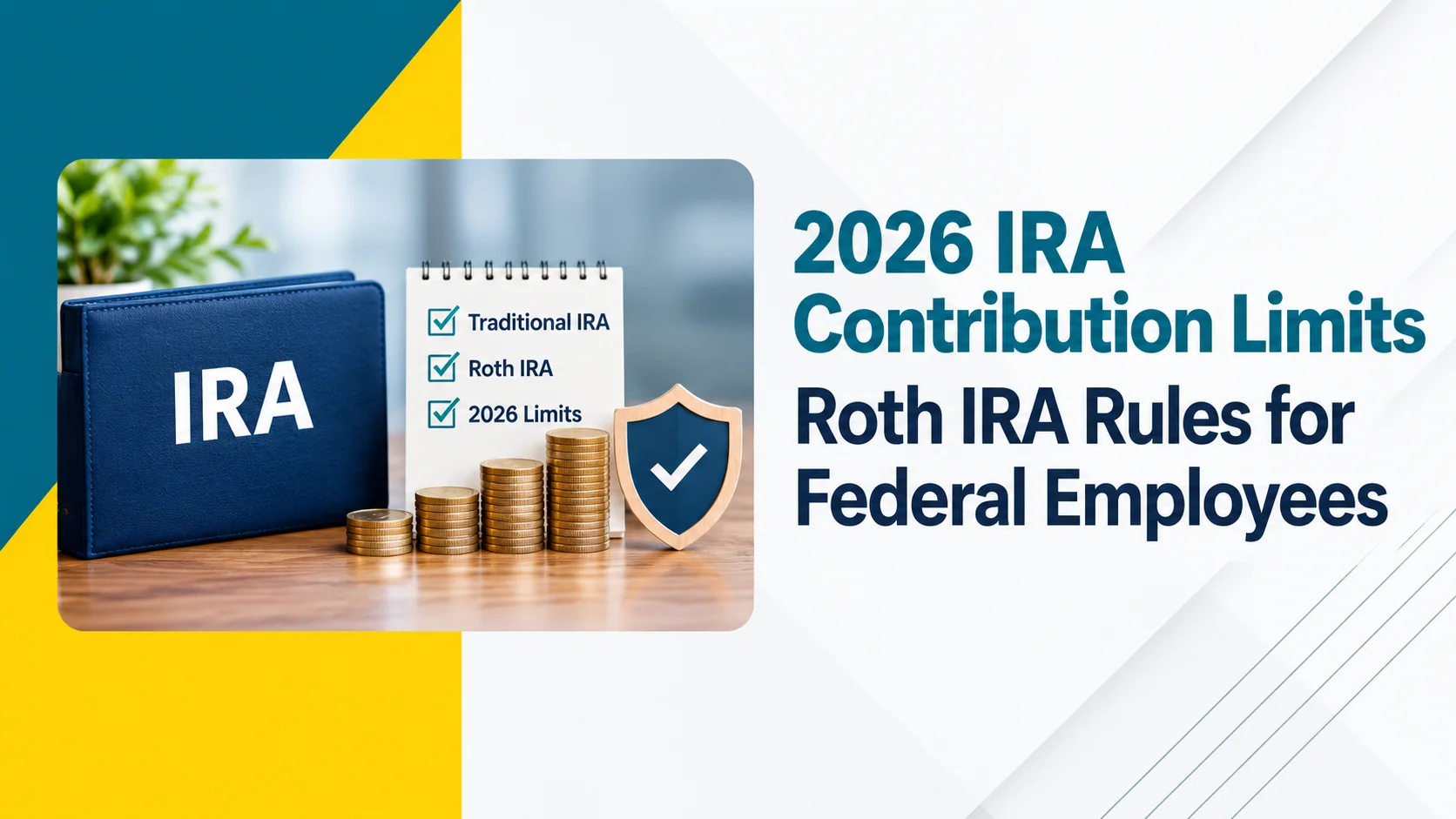
Oct 22, 2026
2026 IRA Contribution Limits (and Roth IRA Limits Explained for Federal Employees)
The 2026 IRA contribution limits increase to $7,500 per year, up from $7,000 in 2025. Savers age 50 and older qualify for an additional $1,100 catch-up contribution, bringing their total allowable amount to $8,600.
Read More
Oct 22, 2026
Blue Cross FEHB Premiums 2027: What Federal Employees Will Pay
Blue Cross FEHB premiums in 2027 are rising between 8.6% and 11.0% for non-postal federal employees. The exact increase depends on your plan option and enrollment tier.
Read More
Oct 22, 2026
2027 FEHB Changes: What Federal Employees Need to Know Before November 9
The 2027 FEHB changes are the premium, plan-availability, eligibility, and benefit updates that OPM announced for the 2027 plan year. FEHB is the Federal Employees Health Benefits Program. OPM is the U.S. Office of Personnel Management.
Read More
Oct 22, 2026
2027 Federal Pay Freeze: How It Could Affect Your FERS High-3 and Retirement Date
The 2027 federal pay freeze is the current proposal to hold base pay and locality pay at 2026 levels for most covered civilian federal employees. It remains subject to congressional action and final implementation.
Read More
Oct 22, 2026
2027 FERS COLA: What the October 14 Announcement Means for Federal Retirees
The 2027 FERS COLA is 2.6% for eligible Federal Employees Retirement System (FERS) retirees age 62 and older. The Social Security Administration (SSA) announced a 3.6% cost-of-living adjustment (COLA) on October 14, 2026, and that figure drives the FERS number.
Read More
Oct 12, 2026
2027 COLA vs. 2027 FEHB Premiums: Will Your Retirement Income Keep Up with Costs?
The 2027 COLA vs. 2027 FEHB premiums comparison shows the average health premium increase outpacing the estimated pension increase. Your own result depends on your plan, coverage tier, and annuity size.
Read More
Oct 9, 2026
TSP Contribution Limits 2027: Catch-Up Rules and Strategy
The TSP contribution limits for 2027 are not official yet, but the regular employee limit is projected at $25,500, up from $24,500 in 2026. The TSP, or Thrift Savings Plan, the federal government's tax-advantaged retirement savings program, follows limits set by the IRS, the Internal Revenue Service. The IRS hasn't published its 2027 figures yet.
Read More
Oct 8, 2026
2027 FEHB Premiums Are Up 10.9% on Average for Enrollees: What to Do Before Open Season
2027 FEHB premiums are up 10.9% on average for the enrollee share, so you should compare plans before Open Season ends on December 14, 2026. The 2027 FEHB premium increase is the average 10.9% rise in the portion of Federal Employees Health Benefits (FEHB) premiums that enrollees pay. Updated October 2026.
Read More
Oct 7, 2026
FERS Supplement: Who Gets It & How Much (2026)
If you are retiring from federal service before age 62, you may be eligible for a temporary monthly payment called the FERS Supplement. It is designed to bridge the income gap until you become eligible for Social Security.
Read More
Oct 6, 2026
Required Minimum Distributions (RMDs) for Federal Employees: TSP Start Ages, Calculations, and Penalties
Required minimum distributions (RMDs) for federal employees are the annual withdrawals the IRS requires from a traditional TSP account. The TSP, or Thrift Savings Plan, is the federal government's tax-advantaged retirement savings program
Read MoreTurn what you read into a plan — free call.
Free 30-minute call with an independent, licensed professional in your state. No obligation.
★★★★★ Reviews on Google & TrustpilotSpouses welcome