

Published
Oct 1, 2026

Last Updated
Oct 1, 2026
2027 FEHB Changes: Premiums, Benefits & What Federal Employees Need to Know
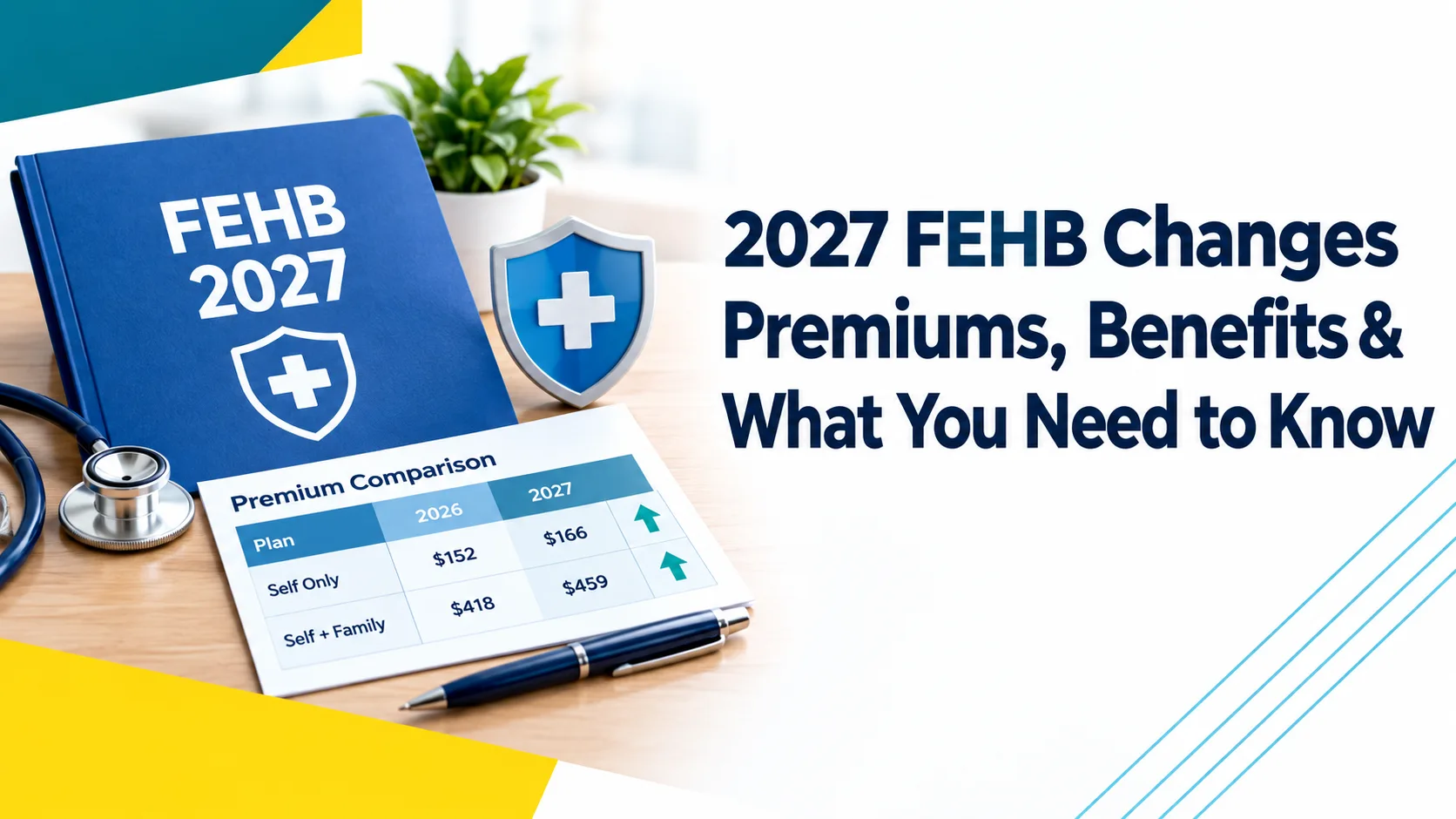
OPM's proposed FEHB plan changes for 2027 arrive with a 10.9% average increase in enrollee premiums. They also tighten the rules for obesity-medication coverage, direct carriers away from vaccine incentives, and add family-member verification. As federal employees review these changes, it may also be useful to reassess other parts of their benefits and retirement strategy, including the TSP Mutual Fund Window and how it fits into their overall investment approach.
FEHB, the Federal Employees Health Benefits Program, is the federal government's group health insurance program. OPM, the U.S. Office of Personnel Management, issued its 2027 FEHB policy guidance to carriers in March 2026. It published the final 2027 premiums and plan offerings on September 30, 2026.
This guide explains what changed, what it costs, and what you should do before Open Season starts on November 9. If you're also preparing for retirement, understanding the latest federal retirement processing timeline can help you plan.
Open Season paragraph (replaces the last paragraph of "Where Do the 2027 FEHB Changes Stand Today?")
According to OPM's Open Season Highlights, health, dental, and vision enrollment continues automatically unless you make a change. FSAFEDS, the Federal Flexible Spending Account Program, works differently. OPM says you must re-enroll each year.
Review your plan every year, because premiums, benefits, and plan availability can all change. Before making changes, it’s also important to understand what FEHB does and does not cover, including long-term care. Read more about whether FEHB covers long-term care, then review the FEHB open season checklist before November 9.
GLP-1 section (replaces the whole section)
What Is the GLP-1 and Obesity Treatment Rule for 2027?
For 2027, OPM requires carriers to cover anti-obesity medications only when members participate in an evidence-based intensive behavioral therapy (IBT) program, both before treatment starts and while it continues. IBT is a structured program of nutrition, physical activity, and behavior-change counseling. Understanding how healthcare costs and benefits fit into the broader retirement picture can also be part of federal retirement income planning.
According to OPM Carrier Letter 2026-07, attestations of prior weight-loss attempts alone should not bypass this requirement.
OPM's rule that plans cover at least one GLP-1 medication and at least two oral anti-obesity medications continues from prior years. GLP-1 medications, short for glucagon-like peptide-1 receptor agonists, include drugs such as semaglutide.
According to OPM's Open Season Highlights, plans must also cover IBT and medical nutrition therapy, including 12 to 22 IBT sessions per year depending on progress. For children and adolescents ages six and older with a BMI above the 95th percentile, plans must cover IBT programs offering 26 or more contact hours over three to 12 months.
The carrier letter states that smartphone-app-only or AI-only programs do not qualify. Virtual programs must include human coaching.
Authorization requirements vary by plan, so check your plan's brochure and prior authorization policy. Read more in our breakdown of FEHB coverage for GLP-1 medications. For federal retirees, it's also important to consider how changing health care costs may affect retirement income; see our latest 2027 FERS COLA estimate for more on potential changes to FERS annuity payments.
Gender dysphoria bullet (replaces the second bullet under "Which Other FEHB Benefits Change for 2027?")
- Exceptions process: According to OPM Carrier Letter 2026-07, carriers must remove, beginning in plan year 2027, any exceptions process for coverage of excluded services for members who are mid-treatment within a surgical or hormonal regimen for diagnosed gender dysphoria. The letter states that carriers must still cover counseling services.
Comparison table rows (replace the anti-obesity and exceptions rows)
Discontinued plans (first sentence)
Nine FEHB plans and one PSHB plan will not be available in 2027. According to the list in OPM's Open Season Highlights, enrollees in these plans must pick a new plan during Open Season. Otherwise, OPM will enroll them in the default plan, Compass Rose Standard for FEHB.
For federal employees reviewing their broader retirement plans during Open Season, it can also be helpful to estimate your potential FERS supplement before making retirement decisions. The FERS Supplement can provide income before age 62 for eligible retirees, subject to specific eligibility and earnings-test rules.
Retirement planning section (replaces the whole section)
How Do FEHB Changes Affect Federal Retirement Planning?
FEHB premiums for annuitants generally come out of their annuity payments. A higher enrollee share reduces your net retirement income unless other income covers the difference.
FERS, the Federal Employees Retirement System, pays most federal employees' annuities. The TSP, or Thrift Savings Plan, the federal government's tax-advantaged retirement savings program, can supply additional income. FEHB rates change every year, so revisit your health premium assumptions each Open Season.
Eligibility has conditions. According to OPM, you may carry FEHB coverage into retirement if you have been enrolled since your first opportunity to enroll, or for the full five years of service immediately before retirement.
You must also retire on an immediate annuity in a qualifying retirement system and be enrolled in an FEHB plan on your retirement date. Dropping coverage late in your career can therefore affect your eligibility.
For related planning topics, Federal Pension Advisors, a retirement planning firm specializing in federal employee benefits, publishes guides on your FERS annuity estimate, TSP withdrawal options, and FEHB in retirement rules. If you would like personalized guidance for your federal retirement planning, you can schedule a personalized consultation with a retirement specialist. For official withdrawal and contribution information, visit the official TSP website.
Open Season section, last paragraph (replaces the "helps employees" sentence)
According to OPM, most FEHB changes made during Open Season take effect in January 2027. Federal Pension Advisors, a retirement planning firm specializing in federal employee benefits, also publishes an Open Season planning guide for federal employees and retirees.
visors, a retirement planning firm specializing in federal employee benefits, also publishes an Open Season planning guide for federal employees and retirees.
Conclusion (first paragraph)
OPM issued its 2027 FEHB policy guidance in March. The agency published the final 2027 premiums and plan offerings on September 30, 2026.
The result is stricter obesity-treatment documentation, no provider vaccine incentives, a narrower exceptions process, family-member verification, nine discontinued FEHB plans, and a 10.9% average increase in enrollee premiums. Review your plan before November 9, check whether it is leaving, and compare total costs rather than premiums alone.
Frequently Asked Questions
1. What are the major FEHB changes for 2027?
The major 2027 FEHB changes include a 10.9% average increase in enrollee premiums, new requirements for anti-obesity medication coverage, changes to vaccine incentives, family-member verification, and the discontinuation of nine FEHB plans.
2. When does FEHB Open Season 2027 start?
FEHB Open Season starts on November 9, 2026. Federal employees can review and change their health plan during Open Season, with most changes taking effect in January 2027.
3. What is changing for GLP-1 and obesity medication coverage in 2027?
For 2027, FEHB carriers must require participation in an evidence-based intensive behavioral therapy (IBT) program before and while members receive anti-obesity medications. Plans must continue covering at least one GLP-1 medication and at least two oral anti-obesity medications.
4. Will FEHB premiums increase in 2027?
Yes. OPM announced an average 10.9% increase in enrollee premiums for 2027. The actual premium change depends on the specific FEHB plan and option selected.
5. What happens if my FEHB plan is discontinued in 2027?
If your FEHB plan will not be available in 2027, you should select a new plan during Open Season. According to OPM, eligible enrollees who do not make a selection will be enrolled in the applicable default plan, Compass Rose Standard for FEHB.
Disclaimer:
This article is for informational and educational purposes only and is not a substitute for official guidance or personalized advice. FEHB premiums, benefits, eligibility requirements, and plan availability can vary by plan and may change. Always review your current plan brochure and OPM's official guidance before making enrollment or retirement decisions.


Get Updated
Subscribe to our weekly updates for the latest on retirement planning, federal benefits, exclusive webinars, and more!

Thomas A. Doherty
Thomas A. Doherty is a retirement planning consultant with 35 years of experience helping individuals, federal employees, academic employees, and business owners better understand their retirement options. His work focuses on helping clients make the most of their available benefits, insurance policies, and investment plans so they can build more stable retirement income and reduce unnecessary financial risk.

Download Federal Retirement: Step-by-step Checklist
This comprehensive guide will help you understand your federal benefits, optimize your savings, and plan for a comfortable future.
Recent Post's