Federal Retirement Planning Blog
453 guides on FERS, TSP, FEHB, Social Security and federal benefits — updated as rules change.

Oct 5, 2026
FEHB Self Plus One vs Self & Family: Which Enrollment Costs Less in 2027?
FEHB Self Plus One vs Self & Family is a choice between two coverage tiers in FEHB, the Federal Employees Health Benefits Program. Self Plus One is often, but not always, the lower-cost tier for a two-person household. For a broader look at 2027 premiums, benefit changes, and plan availability, see our 2027 FEHB changes and key updates. In 2027, some plans charge less for Self & Family. Updated October 2026.
Read More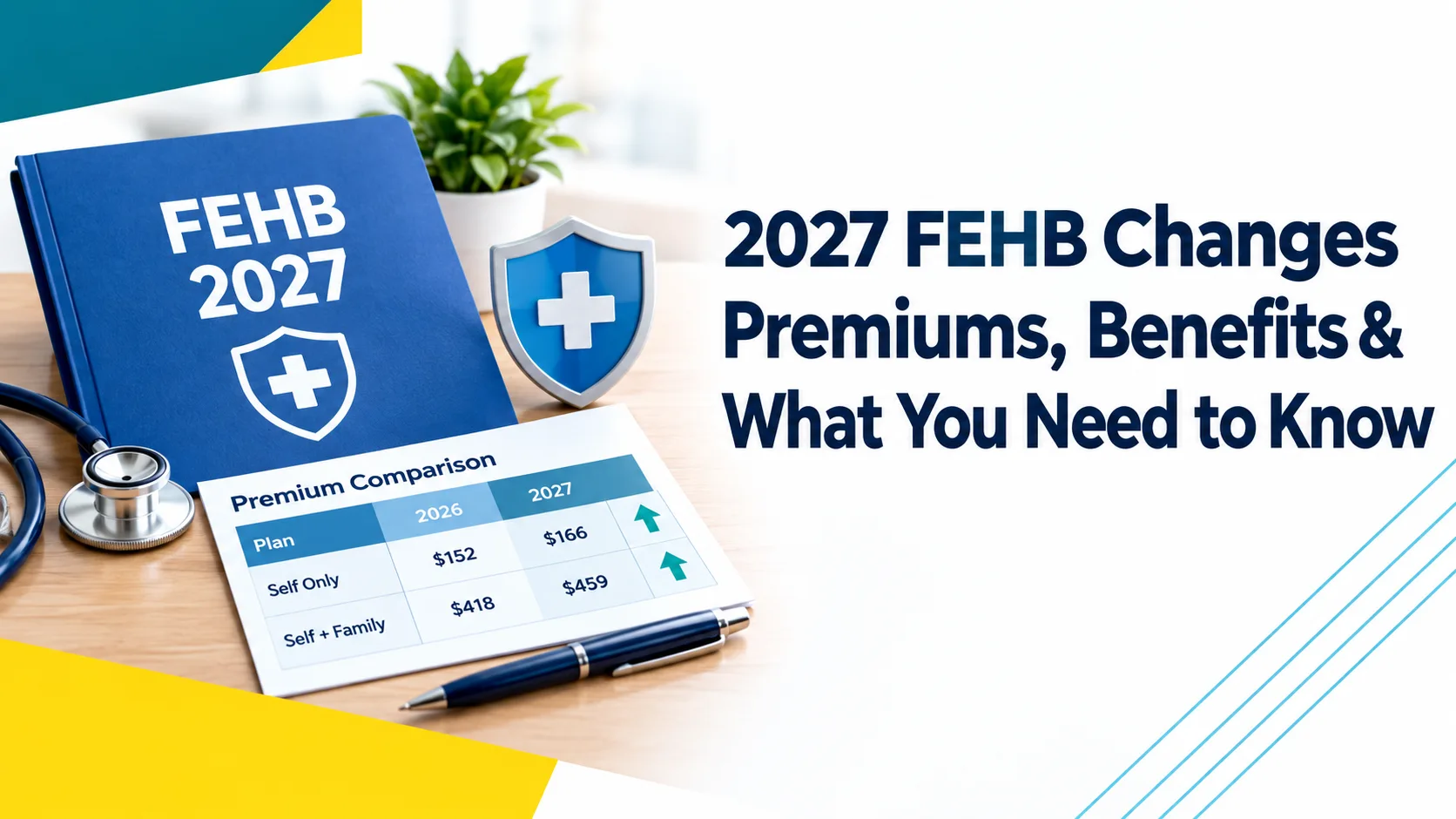
Oct 1, 2026
2027 FEHB Changes: Premiums, Benefits & What Federal Employees Need to Know
OPM's proposed FEHB plan changes for 2027 arrive with a 10.9% average increase in enrollee premiums. They also tighten the rules for obesity-medication coverage, direct carriers away from vaccine incentives, and add family-member verification. As federal employees review these changes, it may also be useful to reassess other parts of their benefits and retirement strategy, including the TSP Mutual Fund Window and how it fits into their overall investment approach.
Read More
Sep 30, 2026
How to Maximize Your TSP Agency Matching Before the End of 2026
To maximize your TSP agency matching before the end of 2026, contribute at least 5% of your basic pay to your TSP account in every remaining pay period. Once you're reviewing your TSP strategy, you may also want to understand the TSP Mutual Fund Window and how it fits into your overall investment approach. Don't hit your annual contribution limit early.
Read More
Sep 29, 2026
2027 FERS COLA Estimate: What the Latest Inflation Data Could Mean for Retirees
Current estimates point to a 2027 cost-of-living adjustment (COLA) of about 2.5% for retirees under FERS, the Federal Employees Retirement System. A 2027 FERS COLA estimate is a projection of the January 2027 annuity increase for FERS retirees, based on inflation and reduced by a formula when inflation exceeds 2%.
Read More
Sep 25, 2026
Federal Retirement Income Planning: Turning Your TSP Into a Retirement Paycheck
Federal retirement income planning means converting your Thrift Savings Plan (TSP) into a reliable paycheck once your federal salary stops. The TSP is the federal government's tax-advantaged defined contribution retirement savings program.
Read More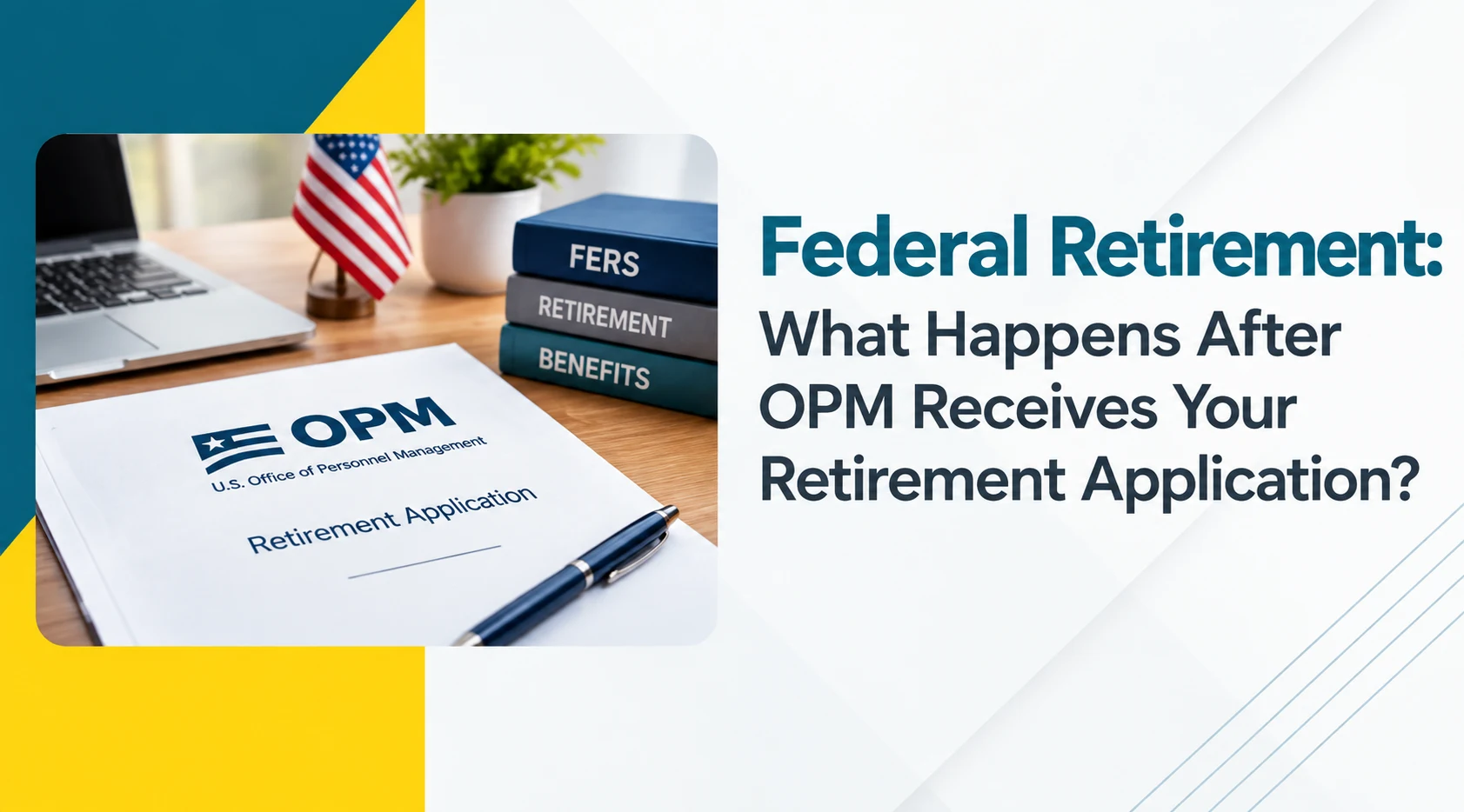
Sep 24, 2026
Federal Retirement: What Happens After OPM Receives Your Retirement Application?
After OPM, the U.S. Office of Personnel Management, receives your retirement application, it sets you up in its system and, if you're eligible, begins partial interim payments. You can check your OPM retirement application status to track your case and understand where it stands. It then reviews your case and finalizes your annuity.
Read More
Sep 23, 2026
Can Your TSP Be Used to Buy Real Estate? What Federal Employees Should Know
Federal Pension Advisors, a retirement planning firm specializing in federal employee benefits, publishes this guide to help federal employees understand TSP borrowing rules before they apply.
Read More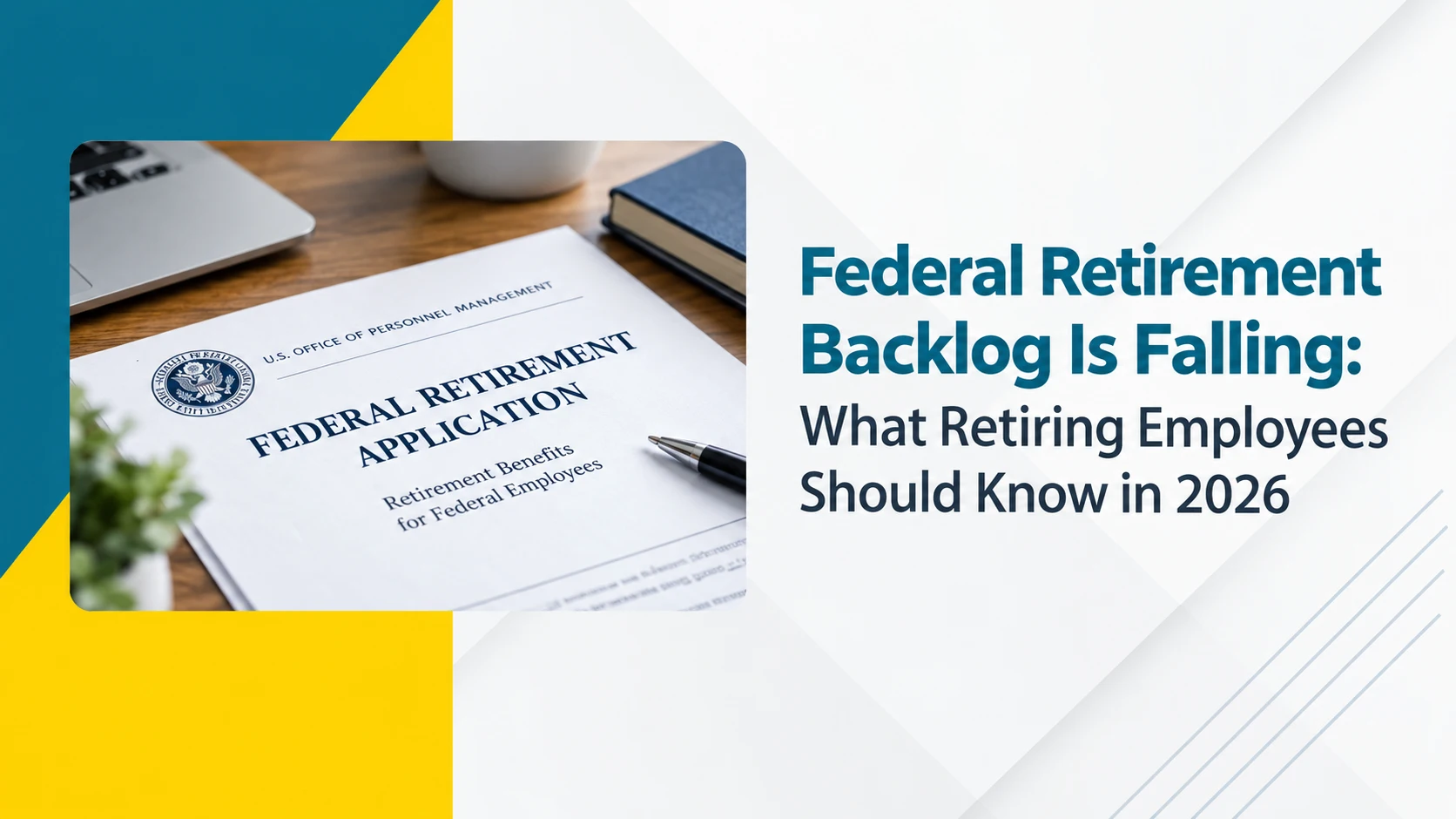
Sep 22, 2026
Federal Retirement Backlog Is Falling: What Retiring Employees Should Know in 2026
The federal retirement backlog declined substantially in 2026. The inventory at OPM, the U.S. Office of Personnel Management, peaked at 65,237 pending claims in February. By the end of August, it had fallen to 15,427 claims, a decline of about 76% over six months.
Read More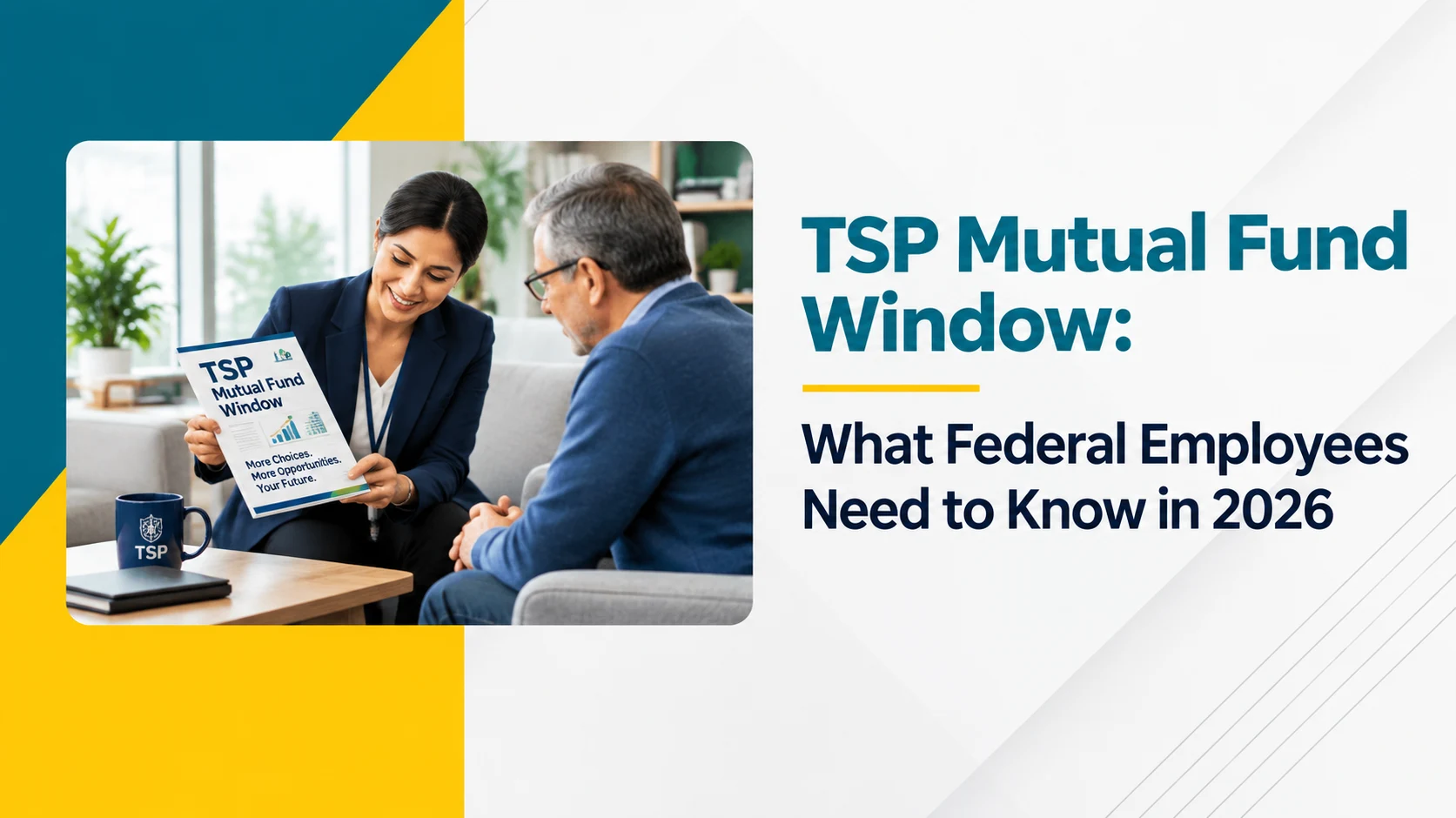
Sep 21, 2026
TSP Mutual Fund Window: What Federal Employees Need to Know in 2026
The TSP Mutual Fund Window (MFW) is an optional investment option within the Thrift Savings Plan (TSP). The TSP is the federal government's tax-advantaged retirement savings program for federal employees and uniformed service members. It lets you invest up to 25% of your TSP balance in publicly available mutual funds.
Read More
Sep 17, 2026
FERS Disability Retirement in 2026: Eligibility, Benefits, and Application Rules
FERS disability retirement is an annuity for federal employees covered by FERS, the Federal Employees Retirement System, whose medical condition stops them from doing their job.
Read More
Sep 16, 2026
Military Buyback Under FERS: Cost, Rules, and Pension Impact in 2026
A military buyback under FERS is a deposit, generally 3% of your military basic pay, that can make qualifying active-duty military service count toward your FERS pension. FERS, the Federal Employees Retirement System, doesn't automatically credit most post-1956 active-duty service. Making the deposit through your employing agency can add years of creditable service and increase your annuity for life.
Read More
Sep 15, 2026
2027 Federal Per Diem Rates: New GSA Lodging and M&IE Rates Explained
For FY 2027, the standard Continental United States (CONUS) per diem consists of a maximum lodging allowance of $113 per night plus a $68 meals and incidental expenses (M&IE) allowance, for a combined listed rate of $181 per day, effective October 1, 2026, through September 30, 2027. The General Services Administration (GSA) Per Diem Bulletin FTR 27-01 raised the standard lodging rate $3, from $110 to $113. The M&IE rate held steady at $68.
Read More
Sep 11, 2026
Retiring Before Medicare? A Federal Employee's FEHB Healthcare Planning Checklist
Retiring before Medicare means leaving federal service at any age under 65 while relying primarily on your Federal Employees Health Benefits (FEHB) coverage until Medicare eligibility begins. If you retire at your Minimum Retirement Age (MRA) of 57, that gap can stretch eight years.
Read More
Sep 10, 2026
Federal Workforce Cuts in 2026: What Federal Employees Need to Know About Retirement
Federal workforce cuts in 2026 continue a large-scale downsizing of the U.S. civil service. Most of the contraction, hundreds of thousands of positions, happened during 2025. Those separations are still working through the system in 2026, alongside new agency reorganization plans.
Read More
Sep 9, 2026
Retiring at 57? How Federal Employees Can Plan for Healthcare Before Medicare
Federal employee retirement healthcare before age 65 rests on one core benefit. Your Federal Employees Health Benefits (FEHB) coverage continues into retirement at the same premium you paid as an active employee, as long as you meet the "5-year rule" and retire on an immediate annuity.
Read More
Sep 7, 2026
Will Your Social Security Be Taxed If You Have a FERS Pension? 2026 Combined Income Rules
Yes, your Social Security benefits can be taxed if you have a FERS pension (Federal Employees Retirement System). The question of Social Security tax with a federal pension comes down to one number: your combined income. The taxable portion of your FERS annuity counts as ordinary income. That raises your combined income, which can make 50% to 85% of your Social Security benefit taxable at the federal level. This guide explains how the 2026 combined income rules work, why FERS income can push you over the thresholds, and how the numbers break down.
Read More
Sep 4, 2026
Why Your FERS Pension Check May Be Smaller Than You Expect: 7 FERS Pension Deductions and Adjustments to Review Before Retirement
FERS pension deductions are the subtractions and adjustments that make your actual FERS retirement income smaller than the gross annuity figure on your estimate. They include survivor benefit reductions, health and life insurance premiums, taxes, early-retirement penalties, and the earnings test on the FERS supplement. FERS, the Federal Employees Retirement System, calculates your gross pension from a formula. The income you live on reflects these deductions and adjustments.
Read More
Sep 3, 2026
Retiring at MRA+30? 7 TSP Risks Federal Employees Should Plan For
TSP risks after early retirement are the specific financial dangers that surface when a federal employee retires at their Minimum Retirement Age with 30 years of service and may start drawing on the Thrift Savings Plan early in retirement. The core problem is time. An MRA+30 retiree may need their TSP to last 35 years or longer, which magnifies every mistake around withdrawal timing, sequence-of-returns exposure, tax treatment, and rollover errors. The seven risks below are the ones early federal retirees should understand, and you can manage each one more effectively with planning before you separate.
Read More
Sep 2, 2026
I Fund Leads August 2026 TSP Returns: Should Federal Employees Change Their Allocation?
TSP performance in August 2026 was broadly positive. Every core fund and every Lifecycle Fund in the Thrift Savings Plan (TSP), the federal government's tax-advantaged retirement savings program, closed the month higher.
Read More
Sep 1, 2026
7 TSP Mistakes Federal Employees Should Avoid Before Retirement
TSP mistakes before retirement are the avoidable errors federal employees make with their Thrift Savings Plan in the final years on the job. You might front-load contributions and lose the agency match, roll the account into an IRA and forfeit the Rule of 55, sit in the wrong funds, or misjudge Roth versus traditional.
Read More
Aug 31, 2026
2027 Federal Pay Raise: Trump Proposes Pay Freeze for Most Federal Employees
The 2027 federal pay raise, as currently proposed, is a pay freeze for most civilian federal employees. Base pay and locality pay would stay at 2026 rates with no increase.
Read More
Aug 27, 2026
Federal Employee Spouse Retirement Benefits: How FERS, FEHB, and Social Security Work Together in a Mixed-Career Marriage
Federal employee spouse retirement benefits are the coordinated pension, health insurance, and Social Security protections a married couple relies on when one spouse works for the federal government and the other works in the private sector. In practice, the federal spouse's annuity, survivor election, and Federal Employees Health Benefits enrollment must be planned alongside the non-federal spouse's Social Security and employer retirement accounts.
Read More
Aug 26, 2026
Does FEHB Cover Long-Term Care? What Federal Employees Need to Know in 2026
No, FEHB does not cover long-term care. The Federal Employees Health Benefits (FEHB) Program is medical insurance. It pays for doctor visits, hospital stays, surgery, and prescriptions, not custodial care.
Read More
Aug 25, 2026
2027 Federal Pay Raise: What Federal Employees Should Know About the August 31 Deadline
A major milestone for the 2027 federal pay raise arrives August 31, 2026. That's the day the president faces a statutory deadline to submit an alternative plan for the across-the-board pay adjustment under 5 U.S.C. § 5303.
Read More
Aug 24, 2026
FERS Basic Employee Death Benefit in 2026: Who Qualifies, How Much Is Paid, and How to Apply
The FERS Basic Employee Death Benefit is a death benefit payable to the eligible surviving spouse, or a qualifying former spouse, of a federal employee who dies while still on the employing agency's rolls. To qualify, the employee must have had at least 18 months of creditable civilian service. The recipient can generally take it as a single payment or in 36 monthly installments.
Read MoreTurn what you read into a plan — free call.
Free 30-minute call with an independent, licensed professional in your state. No obligation.
★★★★★ Reviews on Google & TrustpilotSpouses welcome