
Sep 30, 2026
How to Maximize Your TSP Agency Matching Before the End of 2026
To maximize your TSP agency matching before the end of 2026, contribute at least 5% of your basic pay to your TSP account in every remaining pay period. Once you're reviewing your TSP strategy, you may also want to understand the TSP Mutual Fund Window and how it fits into your overall investment approach. Don't hit your annual contribution limit early.
Read More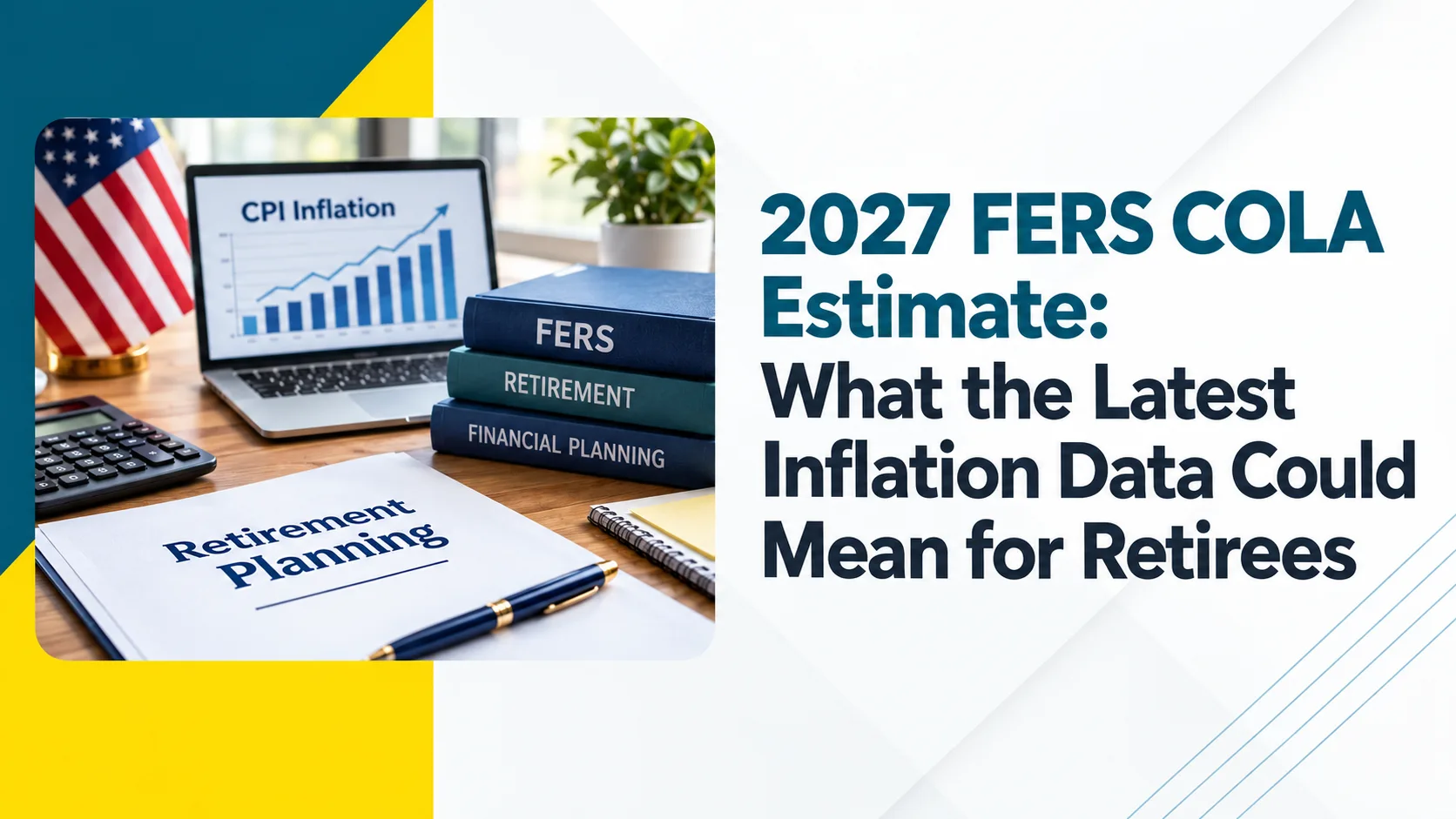
Sep 29, 2026
2027 FERS COLA Estimate: What the Latest Inflation Data Could Mean for Retirees
Current estimates point to a 2027 cost-of-living adjustment (COLA) of about 2.5% for retirees under FERS, the Federal Employees Retirement System. A 2027 FERS COLA estimate is a projection of the January 2027 annuity increase for FERS retirees, based on inflation and reduced by a formula when inflation exceeds 2%.
Read More
Sep 25, 2026
Federal Retirement Income Planning: Turning Your TSP Into a Retirement Paycheck
Federal retirement income planning means converting your Thrift Savings Plan (TSP) into a reliable paycheck once your federal salary stops. The TSP is the federal government's tax-advantaged defined contribution retirement savings program.
Read More
Sep 24, 2026
Federal Retirement: What Happens After OPM Receives Your Retirement Application?
After OPM, the U.S. Office of Personnel Management, receives your retirement application, it sets you up in its system and, if you're eligible, begins partial interim payments. You can check your OPM retirement application status to track your case and understand where it stands. It then reviews your case and finalizes your annuity.
Read More
Sep 23, 2026
Can Your TSP Be Used to Buy Real Estate? What Federal Employees Should Know
Federal Pension Advisors, a retirement planning firm specializing in federal employee benefits, publishes this guide to help federal employees understand TSP borrowing rules before they apply.
Read More
Sep 22, 2026
Federal Retirement Backlog Is Falling: What Retiring Employees Should Know in 2026
The federal retirement backlog declined substantially in 2026. The inventory at OPM, the U.S. Office of Personnel Management, peaked at 65,237 pending claims in February. By the end of August, it had fallen to 15,427 claims, a decline of about 76% over six months.
Read More
Sep 21, 2026
TSP Mutual Fund Window: What Federal Employees Need to Know in 2026
The TSP Mutual Fund Window (MFW) is an optional investment option within the Thrift Savings Plan (TSP). The TSP is the federal government's tax-advantaged retirement savings program for federal employees and uniformed service members. It lets you invest up to 25% of your TSP balance in publicly available mutual funds.
Read More
Sep 17, 2026
FERS Disability Retirement in 2026: Eligibility, Benefits, and Application Rules
FERS disability retirement is an annuity for federal employees covered by FERS, the Federal Employees Retirement System, whose medical condition stops them from doing their job.
Read More
Sep 16, 2026
Military Buyback Under FERS: Cost, Rules, and Pension Impact in 2026
A military buyback under FERS is a deposit, generally 3% of your military basic pay, that can make qualifying active-duty military service count toward your FERS pension. FERS, the Federal Employees Retirement System, doesn't automatically credit most post-1956 active-duty service. Making the deposit through your employing agency can add years of creditable service and increase your annuity for life.
Read More
Sep 15, 2026
2027 Federal Per Diem Rates: New GSA Lodging and M&IE Rates Explained
For FY 2027, the standard Continental United States (CONUS) per diem consists of a maximum lodging allowance of $113 per night plus a $68 meals and incidental expenses (M&IE) allowance, for a combined listed rate of $181 per day, effective October 1, 2026, through September 30, 2027. The General Services Administration (GSA) Per Diem Bulletin FTR 27-01 raised the standard lodging rate $3, from $110 to $113. The M&IE rate held steady at $68.
Read More
Sep 11, 2026
Retiring Before Medicare? A Federal Employee's FEHB Healthcare Planning Checklist
Retiring before Medicare means leaving federal service at any age under 65 while relying primarily on your Federal Employees Health Benefits (FEHB) coverage until Medicare eligibility begins. If you retire at your Minimum Retirement Age (MRA) of 57, that gap can stretch eight years.
Read More
Sep 10, 2026
Federal Workforce Cuts in 2026: What Federal Employees Need to Know About Retirement
Federal workforce cuts in 2026 continue a large-scale downsizing of the U.S. civil service. Most of the contraction, hundreds of thousands of positions, happened during 2025. Those separations are still working through the system in 2026, alongside new agency reorganization plans.
Read MoreDownload Federal Retirement: Step-by-step Checklist
This comprehensive guide will help you understand your federal benefits, optimize your savings, and plan for a comfortable future.
Oops! Something went wrong while submitting the form.
Recent Post's

October 16, 2026
Blue Cross FEHB Premiums 2027: What Federal Employees Will Pay