

Published
Oct 8, 2026

Last Updated
Oct 8, 2026
2027 FEHB Premiums Are Up 10.9% on Average for Enrollees: What to Do Before Open Season
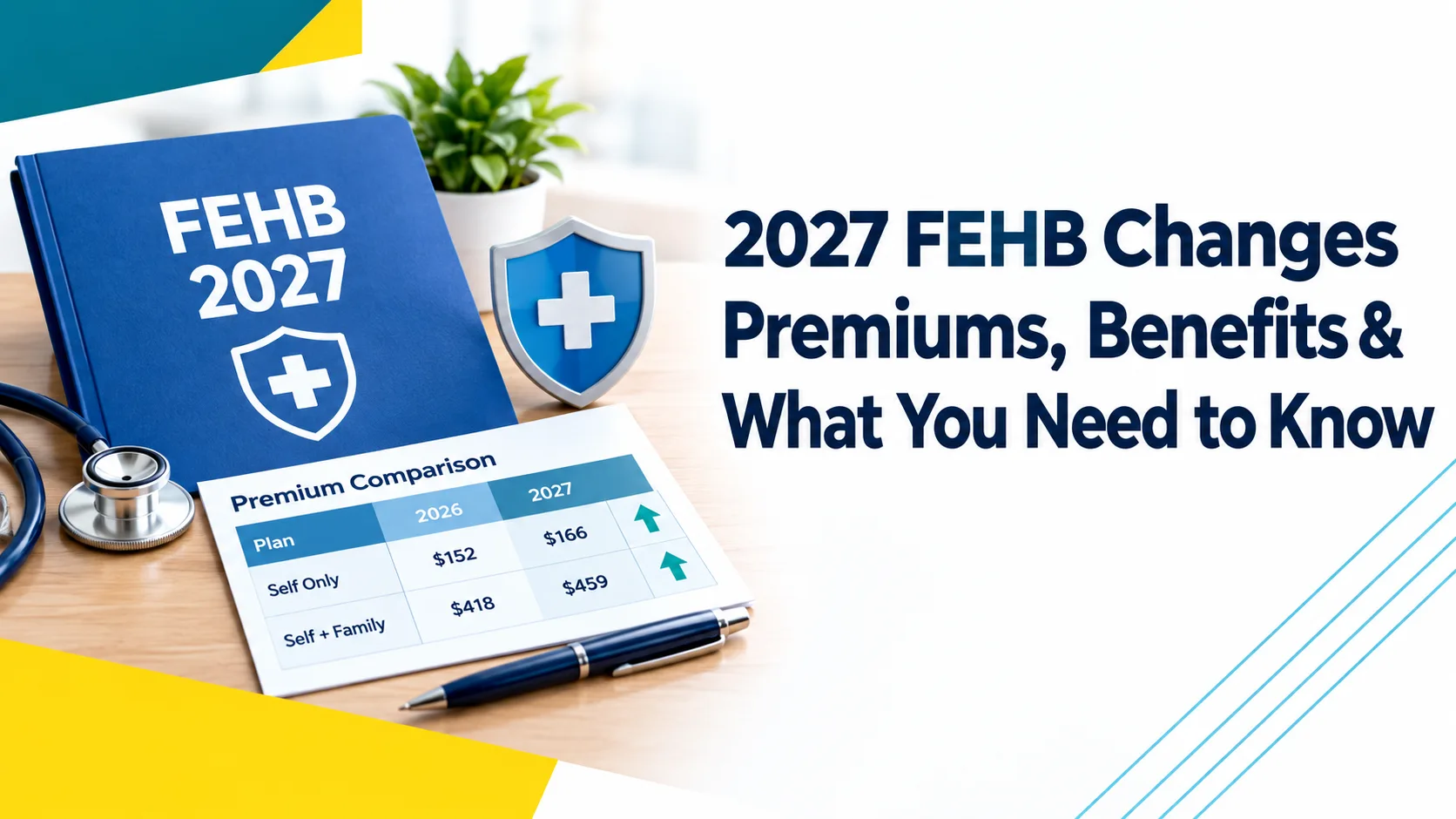
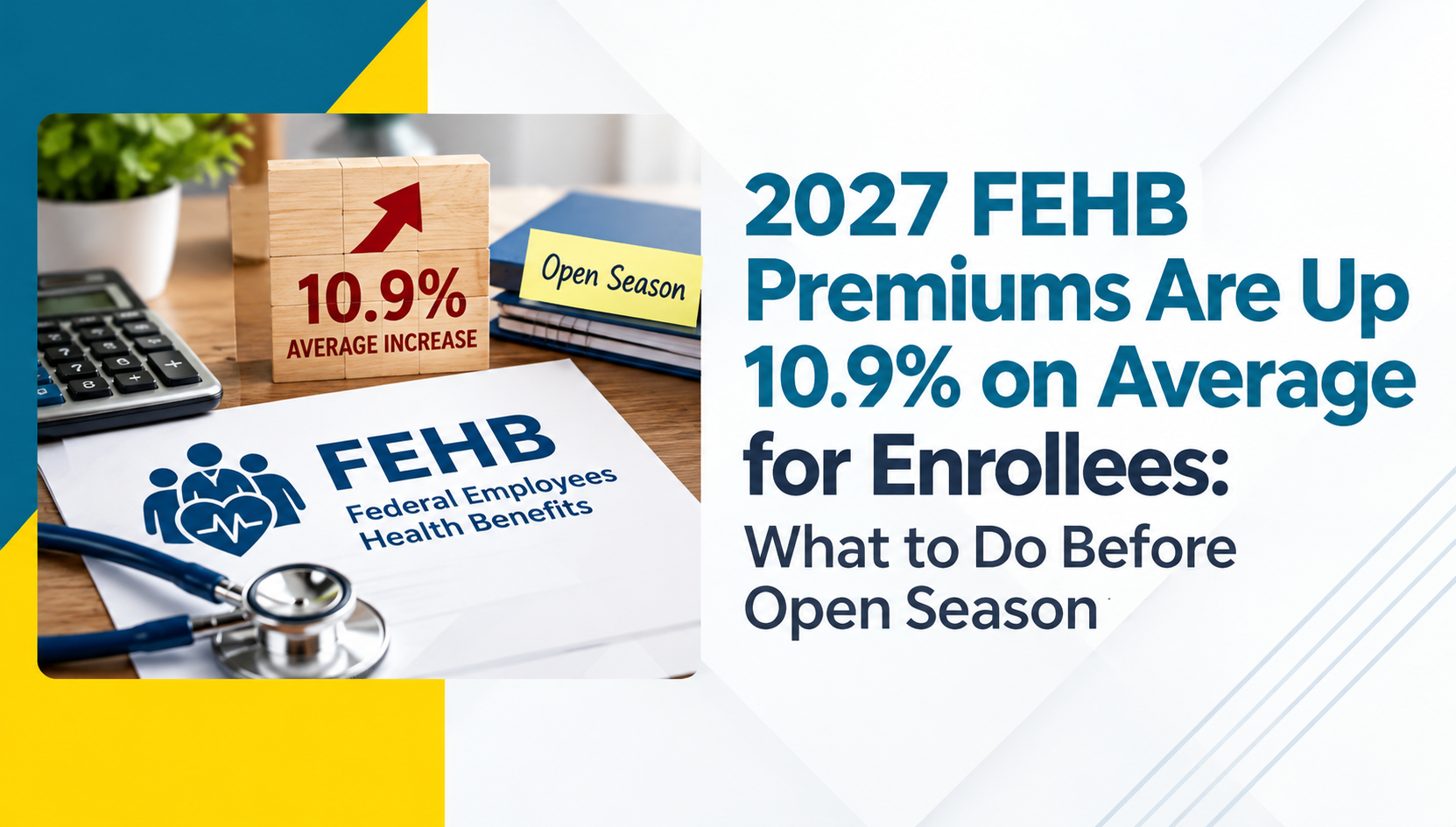
2027 FEHB premiums are up 10.9% on average for the enrollee share, so you should compare plans before Open Season ends on December 14, 2026. The 2027 FEHB premium increase is the average 10.9% rise in the portion of Federal Employees Health Benefits (FEHB) premiums that enrollees pay. Updated October 2026.
According to the U.S. Office of Personnel Management (OPM), the agency that administers FEHB, the average enrollee share rises 10.9% in 2027, down from 12.3% in 2026. OPM published the figures in its Open Season Highlights for Plan Year 2027.
The same OPM document reports a 9.3% average increase in the overall FEHB premium and an 8.6% increase in the government contribution. The 10.9% figure applies only to the share you pay.
The average FEHB enrollee share has increased by double digits for the third consecutive plan year. According to My Federal Retirement's analysis of OPM data, it rose 13.5% in 2025, 12.3% in 2026, and 10.9% in 2027.
This guide explains what changed, why your increase may differ from the average, and the seven steps to take before Open Season closes.
Federal Pension Advisors, a retirement planning firm specializing in federal employee benefits, prepared this guide. It gives general information, not individualized advice. Confirm every figure against OPM's FEHB premiums page before you decide.
What 2027 FEHB Premiums Up 10.9% Means for Enrollees
The 2027 FEHB premium increase is a 10.9% average rise in the enrollee share of premiums for the Federal Employees Health Benefits (FEHB) Program. The program covers federal employees, retirees, and their families. According to the U.S. Office of Personnel Management (OPM), which administers FEHB, the increase takes effect in the 2027 plan year and follows the 2026 FEHB premium increase, when the average enrollee share rose by 12.3%.
Why this placement works: The link is directly relevant to the comparison between the 2027 and 2026 premium increases, rather than being forced into unrelated text. Your existing 2026 article specifically covers the 12.3% enrollee-share increase.
The enrollee share is the portion of the premium you pay, and the government pays the rest. The 10.9% number is an average across all enrollees.
Your actual change depends on your plan and your enrollment type: Self Only, Self Plus One, or Self and Family. According to OPM's September 30 news release, coverage continues into 2027 if you make no changes. If your plan remains available, that generally means you keep it.
Your increase can land well above or below 10.9%. According to My Federal Retirement's analysis of OPM's rate charts, the largest Self Plus One increase was 104.9%, while some plans' premiums fell. OPM's 2027 rate charts are already posted, so you can look up your own plan today.
A FEHB Open Season guide walks you through the full process.
How the 2027 FEHB Premium Increase Compares with Prior Years
The 2027 increase is smaller than the 2025 and 2026 increases, but it compounds on top of them. According to My Federal Retirement's analysis of OPM data, the average enrollee share rose 8.7% in 2023, 7.7% in 2024, 13.5% in 2025, 12.3% in 2026, and 10.9% for 2027.
Source: My Federal Retirement's calculations from OPM's annual program-wide averages, compounded from 2022. The last column is illustrative. It is not the cumulative increase experienced by an individual enrollee or any particular FEHB plan.
Each year's increase applies to a higher base than the year before.
OPM reports that the average government contribution rises 8.6% in 2027, compared with a 10.9% rise in the average enrollee share. These are program-wide averages. They don't tell you how the government contribution changes for any one plan.
According to OPM's Open Season Highlights, the government contribution for most employees and annuitants equals the lesser of two amounts. One is 72% of the program-wide weighted average premium. The other is 75% of the total premium for the plan you select.
For many federal employees, rising health premiums can put additional pressure on household budgets. That makes an annual plan review important. A federal retirement budgeting guide shows how health costs fit into a longer-term plan.
Why 2027 FEHB Premiums Differ Widely by Plan
The 10.9% average hides a wide spread between plans. According to My Federal Retirement's analysis of OPM's 2027 rate charts, the median Self Only premium change was 5.9%, well below the program-wide average.
The program-wide figure weights each plan by enrollment. The median counts each plan entry equally.
Source: My Federal Retirement's analysis of OPM's 2027 FEHB rate charts, 117 plan entries with comparable 2026 and 2027 premiums. Entries are not weighted by enrollment.
Nationwide plans show the spread clearly. Self Only covers one person, and biweekly premiums apply to active employees. OPM's 2027 rate charts, as compiled by My Federal Retirement, show these premiums for selected nationwide plans:
Annual change is our calculation: the biweekly change multiplied by 26 pay periods. Annuitants pay monthly, so their totals differ slightly.
The lowest premium isn't always the best value. Total annual cost is your annual premium plus your expected out-of-pocket spending.
MHBP Standard Option shows why. Its Self Only premium rises $1,539.72 a year, so you'd need to save more than that in deductibles, copays, and prescriptions to come out ahead. GEHA High Option goes the other way, with a Self Only premium that drops $709.28 a year.
Compare both sides of that equation before you switch.
The Self Plus One and Self and Family quirk
In some plans, Self Plus One costs more than Self and Family. According to OPM, enrollees who want to cover one eligible family member can elect either enrollment type. OPM also publishes a chart that identifies the plans where this happens.
According to My Federal Retirement's analysis, 39 FEHB entries show this pattern. Among nationwide plans, the biweekly Self Plus One premium for MHBP Standard Option is $442.77, versus $400.78 for Self and Family, a gap of $41.99. Over 26 pay periods, that's about $1,092.
Check both prices for your plan. OPM's premiums page links the full list.
What the 10.9% FEHB Increase Costs per Paycheck or Annuity Payment
A 10.9% increase in the enrollee share can add hundreds of dollars to annual premium costs, depending on your plan and enrollment type. The examples below are plan-specific. They aren't the average enrollee's experience.
Using the Blue Cross and Blue Shield Service Benefit Plan Standard Option, the Self Only biweekly premium rises $16.33, or about $425 a year. According to My Federal Retirement's analysis of OPM's rate charts, the Self Plus One premium rises $39.01 biweekly, about $1,014 a year. The Self and Family premium rises $39.24 biweekly, about $1,020 a year.
Some plans cost far more. According to the same analysis, MHBP Standard Option Self Plus One rises $226.65 biweekly, about $5,893 a year.
Retirees and other annuitants pay monthly. According to My Federal Retirement's analysis of OPM's rate charts, the 2027 Standard Option Self Only premium is $443.41 per month for annuitants, about $5,321 a year.
According to OPM's premiums page, the 2027 maximum biweekly government contribution for most employees and annuitants is $352.04 for Self Only, $767.53 for Self Plus One, and $843.82 for Self and Family. The maximum monthly contribution is $762.75, $1,662.98, and $1,828.28, respectively.
How premiums affect your retirement budget
Health premiums come out of your take-home pay while you work. Once you retire, they come out of your annuity.
For retirees, the premium reduces the monthly payment from FERS, the Federal Employees Retirement System, or CSRS, the Civil Service Retirement System. It also affects how much you draw from the TSP, or Thrift Savings Plan, the federal government's tax-advantaged retirement savings program.
A 10.9% average increase, compounded over several years, can change how much income you need in retirement. If you're approaching your MRA, or Minimum Retirement Age, the earliest age a FERS employee can retire with an immediate annuity, include projected premium growth in your income plan.
A FERS annuity calculation guide and TSP withdrawal strategies explain how these pieces fit together.
According to OPM's FEHB frequently asked questions, FEHB law requires a retiring employee to be covered under FEHB for the five years of service immediately before retirement. If that period is less than five years, the requirement is coverage for all service since the first opportunity to enroll. OPM's Office of Retirement Programs makes the final eligibility determination.
Before you drop FEHB coverage, check how doing so could affect your eligibility to continue FEHB in retirement. FEHB in retirement covers this rule in detail, and OPM's FAQ on the five-year requirement has the official wording.
Other 2027 FEHB Changes Beyond Premiums
OPM's 2027 FEHB changes include plan departures and new coverage rules in addition to higher premiums. According to OPM's Open Season Highlights, OPM will offer 118 FEHB plan options from 45 carriers in 2027, and nine FEHB plans will not be available.
FEHB plans ending after 2026
According to OPM's Open Season Highlights, these FEHB plans will not be available in 2027:
- Independent Health Standard
- Independent Health HDHP
- Blue Care Network of Michigan Southeast High
- UHC (Choice Primary West) High
- UHC (Choice Plus Primary West) High
- Health Net of California (Northern) High
- Health Net of California (Southern) Standard, Basic, and High
OPM says enrollees in these plans must select a new plan during Open Season. Otherwise, OPM automatically enrolls them in the default plan, Compass Rose Standard.
GLP-1 drugs and rising costs
OPM cites prescription drug spending as one driver of rising premiums. According to OPM's Open Season Highlights, higher spending on GLP-1s, specialty drugs, and other high-cost therapies is one of the main causes. GLP-1 drugs are a class of medications used for diabetes and weight loss.
According to FedSmith, OPM's Office of the Inspector General issued a report in December 2025 on GLP-1 spending. It found that FEHB pharmacy spending on GLP-1 medications rose more than 500% from 2019 to 2024 for the two carriers it studied.
According to OPM's March 31, 2026 call letter for plan year 2027 (Carrier Letter 2026-07), carriers must cover at least one GLP-1 medication and at least two oral anti-obesity medications. OPM's Open Season Highlights adds that all carriers will require documented participation in an intensive behavioral therapy program both before and during treatment with these medications.
Check your plan's 2027 brochure for its specific rules.
Family member verification
According to OPM's Open Season Highlights, anyone who adds a new family member to a FEHB or PSHB plan during Open Season must submit supporting documentation. OPM uses it to verify the family member's eligibility. The FEHB Protection Act of 2025 requires OPM to strengthen this verification.
Gather marriage or birth records before you submit your election. OPM's Family Member Eligibility Verification page has the current requirements.
FSAFEDS, PSHB, and FEDVIP
According to OPM's Open Season Highlights, FSAFEDS adds a Visa FSA Card for health care flexible spending accounts in 2027. FSAFEDS is the Federal Flexible Spending Account Program. It doesn't continue automatically, so you must re-enroll each year to participate.
The Postal Service Health Benefits (PSHB) Program has its own rates. According to OPM's Open Season Highlights, PSHB enrollees will pay an average of 8.2% more toward their share, down from 11.3% in 2026. The 10.9% figure applies to FEHB, not PSHB.
According to the same document, dental premiums in the Federal Employees Dental and Vision Insurance Program (FEDVIP) rise 1.0% on average in 2027, and vision premiums rise 1.6%. Check OPM's PSHB premiums page or OPM's dental and vision page for your plan's rates.
For related changes, see the 2027 FEHB changes overview.
Seven Steps to Take Before FEHB Open Season Ends December 14
Federal employees can review FEHB coverage in seven steps before Open Season closes on December 14, 2026. According to OPM, the 2026 Federal Benefits Open Season runs from November 9 through December 14, 2026.
According to OPM's Open Season Highlights, Open Season changes take effect January 10, 2027, for non-Postal FEHB employees and January 1, 2027, for annuitants.
- Find your 2027 rate. Look up your current plan's 2027 premium for your enrollment type in OPM's posted rate charts.
- Compare plans with the same enrollment type. OPM says full brochures and its plan comparison tool will be available in early November.
- Price Self Plus One against Self and Family. If you cover one family member, compare both enrollment types for your plan.
- Confirm your plan isn't ending. Check your plan against OPM's list of the nine FEHB plans that won't be available in 2027.
- Look beyond the premium. Compare deductibles, copays, out-of-pocket maximums, drug coverage, and provider networks.
- Consider a high deductible health plan (HDHP). It can lower premiums, but you pay more at the point of care.
- Update your budget and decide by December 14. Include your expected annuity and TSP withdrawals in your estimate.
A guide to HDHPs and health savings accounts explains the trade-offs of step six. Write down your current plan's 2027 rate next to the rates for two alternatives. Seeing three numbers side by side makes the choice easier.
For a fuller sequence that places health coverage alongside your retirement date, see the federal retirement planning checklist from Federal Pension Advisors, a retirement planning firm specializing in federal employee benefits.
Review Your FEHB Coverage Before December 14
The 2027 FEHB premium increase averages 10.9% for the enrollee share, but plan-level changes vary widely. Some plan-level enrollee premiums decrease, while others increase by more than 100%. Federal employees who are unsure how these changes fit into their broader retirement picture can review their retirement and benefits strategy.
Better SEO option: Use a descriptive anchor like “get personalized federal retirement guidance” rather than “click here.” The appointment page itself is positioned around personalized retirement guidance and federal benefits planning.
Review your retirement plan, compare both family enrollment types, and confirm that your plan isn't ending. Make your decision before Open Season closes on December 14, 2026.
Federal Pension Advisors, a retirement planning firm specializing in federal employee benefits, provides retirement planning for federal employees, including how health coverage costs fit alongside your FERS pension, TSP withdrawals, and retirement date.
Schedule a retirement planning consultation to discuss how FEHB costs may fit into your broader retirement income plan.
This article is general information, not individualized financial, legal, or insurance advice. Confirm all premiums and plan details with OPM before enrolling.
Frequently Asked Questions About 2027 FEHB Premiums
How much are FEHB premiums going up in 2027?
According to the U.S. Office of Personnel Management (OPM), enrollees in the Federal Employees Health Benefits (FEHB) Program will pay an average of 10.9% more toward premiums in 2027. OPM reported a 12.3% average increase for 2026. Individual plans vary widely, so check your own plan's rate.
When is FEHB open season?
The 2026 Federal Benefits Open Season runs from November 9 through December 14, 2026, according to the U.S. Office of Personnel Management (OPM). Changes made during this period take effect with the 2027 plan year. Enrollees who make no changes keep their current Federal Employees Health Benefits (FEHB) coverage.
Do FEHB premiums go up every year?
The average enrollee share of Federal Employees Health Benefits (FEHB) premiums has increased every year since 2023. According to My Federal Retirement's analysis of U.S. Office of Personnel Management (OPM) data, it rose 8.7% in 2023, 7.7% in 2024, 13.5% in 2025, 12.3% in 2026, and 10.9% for 2027.
Why are FEHB premiums going up so much?
The U.S. Office of Personnel Management (OPM) attributes the 2027 Federal Employees Health Benefits (FEHB) increase to rising prices and utilization of hospital and physician services, growth in behavioral health care, and higher prescription drug spending. OPM names GLP-1 drugs and specialty drugs as major drivers of that drug spending.
What happens if I do nothing during open season?
If your current plan remains available, your coverage continues into 2027 when you make no changes, according to the U.S. Office of Personnel Management (OPM). If your Federal Employees Health Benefits (FEHB) plan is ending, OPM automatically enrolls you in the default plan, Compass Rose Standard, unless you choose another.
Will my FEHB premium go up 10.9%?
No. The 10.9% figure is the average increase in the enrollee share of Federal Employees Health Benefits (FEHB) premiums. According to My Federal Retirement's analysis of U.S. Office of Personnel Management (OPM) rate charts, the median Self Only change was 5.9%. Of 117 plan entries, 20 cost less and 18 rose 15% or more.
Disclaimer
This article provides general information about Federal Employees Health Benefits (FEHB) premiums, Open Season, and federal retirement planning. It is not individualized financial, legal, tax, insurance, or benefits advice. FEHB premiums, plan benefits, eligibility rules, and other details can change. Confirm current premiums, plan information, and eligibility requirements with the U.S. Office of Personnel Management (OPM) before making enrollment or retirement decisions.

Get Updated
Subscribe to our weekly updates for the latest on retirement planning, federal benefits, exclusive webinars, and more!

Thomas A. Doherty
Thomas A. Doherty is a retirement planning consultant with 35 years of experience helping individuals, federal employees, academic employees, and business owners better understand their retirement options. His work focuses on helping clients make the most of their available benefits, insurance policies, and investment plans so they can build more stable retirement income and reduce unnecessary financial risk.

Download Federal Retirement: Step-by-step Checklist
This comprehensive guide will help you understand your federal benefits, optimize your savings, and plan for a comfortable future.
.webp)