
.png)


TSP Allocation Risk in 2026: What Federal Employees Should Review Before Retirement
TSP Allocation Risk in 2026: What Federal Employees Should Review Before Retirement
TSP allocation risk is the danger that the mix of funds inside your Thrift Savings Plan (TSP), the federal government's tax-advantaged retirement savings program, no longer matches the time you have left before you need the money. As you approach retirement, an allocation that once helped you grow wealth can quietly expose you to losses you no longer have time to recover from.
In 2026, that risk is especially relevant. The I Fund returned 32.45% in 2025, according to FedSmith. Some federal employees may now hold more stock funds than they intended as they near retirement.
Federal employees looking for age-based fund mix examples can review our guide to the best TSP allocation. This article focuses specifically on allocation risk before retirement.
This article explains what TSP allocation risk means, why 2026 is a high-stakes year to review it, how the five core funds and the Lifecycle (L) Funds differ in risk, and what you should check before retirement. Federal Pension Advisors connects federal employees with independent, licensed financial professionals who can help review TSP allocation, FERS benefits, Social Security timing, and retirement income planning. Allocation drift is a common issue among employees within five years of retirement.
What Is TSP Allocation Risk?
TSP allocation risk is the mismatch between how your Thrift Savings Plan is invested and how soon you will draw on it. Every TSP dollar sits in one of five individual funds or in a Lifecycle Fund. Each carries a different balance of growth potential and volatility.
When your time horizon shortens but your allocation stays aggressive, one major down year can materially reduce your retirement income if withdrawals begin before the portfolio recovers.
The core problem is that market returns are not the same as your returns. The C Fund, which tracks large U.S. companies in the S&P 500, delivered a 14.79% annualized return over the 10 years ending December 31, 2025, per the TSP's official Fund Information sheet. That long-run figure hides sharp single-year swings.
A retiree who begins withdrawals during a downturn faces sequence-of-returns risk, the compounding damage of selling shares while prices are depressed. Together, allocation risk and withdrawal timing determine how long your balance lasts.
Why 2026 Is a High-Stakes Year to Review Your Allocation
Recent market moves have made 2026 an unusually important year to review your TSP allocation. The C, S, and I Funds dropped sharply on April 2–3, 2026, according to FedTools, following a new tariff announcement.
The I Fund, 2025's top performer, led that reversal after a sharp March 2026 loss of more than 9%, according to Federal News Network. If you chased 2025's international returns, you may now hold more risk than your retirement timeline can absorb.
The lesson is diversification, not prediction. FedTools notes that the TSP "quilt chart" published annually by FedSmith shows the leading fund often changes from year to year.
Overweighting any single fund based on last year's results is a common investor behavior risk. If you're three years from retirement, a concentrated equity position is not an opportunity. It is an exposure you should review and, in many cases, reduce.
The Five TSP Funds and Their Risk Profiles
The Thrift Savings Plan offers five individual funds, each with a distinct risk profile. Understanding these is the foundation of managing allocation risk before retirement.
The G Fund (Government Securities Investment Fund) holds short-term U.S. Treasury securities. The U.S. Government guarantees payment of principal and interest, so there is no risk of loss of principal. The F Fund (Fixed Income Index Investment Fund) tracks the Bloomberg U.S. Aggregate Bond Index. It carries interest-rate risk and can decline in value.
The C Fund (Common Stock Index Investment Fund) tracks the S&P 500. The S Fund (Small Capitalization Stock Index Investment Fund) holds small and mid-sized U.S. companies not in the S&P 500. The I Fund (International Stock Index Investment Fund) holds stocks of companies outside the United States and adds currency risk on top of equity risk.
TSP fund comparison: risk, holdings, and role near retirement
Sources: 2025 returns and G Fund 10-year figure per the TSP's Fund Information sheet and Government Executive; C Fund (14.79%), F Fund (2.11%), and S Fund (11.04%) 10-year annualized figures per the TSP Fund Information sheet and FedSmith; I Fund 10-year annualized figure per Morningstar/FedSmith reporting. Ten-year figures are annualized long-run returns; 2025 figures are single-year returns.
The takeaway from the table is structural. The G Fund is designed for principal preservation, while the F Fund may help reduce volatility but can still decline in value.
The C, S, and I Funds exist to grow your balance, with volatility as the price of that growth. Allocation risk arises when the growth-oriented funds dominate a portfolio that should be shifting toward preservation.
For a beginner's breakdown of what each of the five funds holds, see our guide to the TSP funds explained.
Lifecycle (L) Funds vs. Do-It-Yourself Allocation
The Lifecycle Funds are the TSP's built-in answer to allocation risk. Each of the eleven L Funds is a professionally designed mix of the five individual funds. Every quarter, the target allocations of all L Funds except L Income automatically shift from higher risk toward lower risk as the target date approaches, according to the TSP.
This automatic "glide path" reduces equity exposure as you near retirement without requiring you to act.
One common trap is worth naming directly. When an L Fund reaches its target date, it rolls into the L Income Fund, which keeps a conservative allocation, per the TSP.
If you keep working past your fund's target year, your new contributions flow into that conservative mix, which may grow too slowly to support the retirement you are still building toward. Choosing an L Fund based on your actual expected withdrawal date, not just your age, is the safeguard.
Comparing the two approaches
For many pre-retirees, the L Fund matching your true withdrawal year removes the single most-skipped task in self-directed investing: rebalancing. If you prefer to manage individual funds, the discipline required is ongoing, not one-time.
What Federal Employees Should Review Before Retirement
Reviewing TSP allocation risk before retirement should be a structured process, not a guess. Review these steps to align your account with your timeline.
- Confirm your true retirement and withdrawal date. Your allocation should track when you will actually start drawing income, not simply your current age.
- Check your current fund mix. Log in and record the exact percentage in the G, F, C, S, and I Funds. If you increased stock exposure after 2025's returns, you may be holding more equity risk than intended.
- Compare your mix to your time horizon. The closer you are to withdrawals, the stronger the case for shifting toward the G and F Funds to protect principal.
- Decide between an L Fund and a custom mix. For automatic risk reduction, select the L Fund matching your withdrawal year. If you self-manage, set a rebalancing schedule.
- Coordinate with your full FERS picture. Under the Federal Employees Retirement System (FERS), your TSP is one of three income pillars alongside the FERS Basic Benefit annuity and Social Security. A conservative TSP may be reasonable if your annuity covers essential expenses.
- Verify your contribution rate. For 2026, the IRS elective deferral limit is $24,500, with an $8,000 catch-up for those 50 and older and a higher $11,250 catch-up for ages 60–63 under SECURE 2.0, according to the IRS. FERS employees generally need to contribute 5% of basic pay to receive the full agency match.
Federal Pension Advisors connects federal employees with independent, licensed financial professionals who can help review TSP allocation, FERS benefits, Social Security timing, and retirement income planning. Run this review annually in your final five years before retirement, since both markets and contribution rules change each year.
How Your Retirement System Shapes Allocation Risk
The right level of TSP allocation risk depends partly on which retirement system covers you. Under FERS, the Federal Employees Retirement System, retirees receive a defined-benefit annuity plus Social Security. Your TSP is one leg of a three-legged stool and can carry more or less risk depending on how much the other two legs cover.
Under CSRS, the Civil Service Retirement System, the older system covering employees hired before 1984, the pension is larger and there is no automatic agency match to the TSP. That changes how the account fits into your overall plan.
The practical rule is to state your guaranteed income first, then size your TSP risk to the gap. If your FERS annuity and Social Security cover your essential expenses, part of your TSP may stay in growth funds longer.
If they don't, protecting TSP principals as retirement nears becomes more urgent. The U.S. Office of Personnel Management (OPM) administers these annuity benefits, and your annuity estimate from OPM is the anchor for this calculation.
The Bottom Line
TSP allocation risk is manageable, but only if you review it deliberately before retirement rather than assuming last year's mix still fits.
The events of early 2026, a sharp reversal in the I Fund and broad equity declines in April, show how quickly a comfortable allocation can become a liability for someone near their withdrawal date. Confirm your true timeline, check your current fund mix against it, decide between a Lifecycle Fund and a custom allocation, and coordinate the result with your FERS or CSRS income picture.
Before making changes, use the TSP calculator to model your projected balance, then review how your allocation fits your FERS pension, Social Security timing, and retirement income needs.
For a review of your TSP allocation and how it fits your full federal retirement plan, Federal Pension Advisors connects federal employees with independent, licensed financial professionals who can help review TSP allocation, FERS benefits, Social Security timing, and retirement income planning.
Before changing your TSP allocation or starting withdrawals, consider reviewing the full picture. Schedule a TSP allocation review with a licensed financial professional who understands federal retirement benefits.
Frequently Asked Questions
1. What is the safest TSP fund for someone near retirement?
The G Fund is the safest TSP fund because it invests in short-term U.S. Treasury securities with principal guaranteed by the U.S. Government, so there is no risk of loss. According to the TSP, it earns modest returns that may barely outpace inflation, so most near-retirees blend it with other funds.
2. How should I change my TSP allocation before I retire?
Shift gradually toward capital preservation as your withdrawal date nears. Many pre-retirees increase their G and F Fund share to protect principal while keeping some C, S, or I Fund exposure for growth. You can also choose the Lifecycle Fund matching your withdrawal year, which reduces equity risk automatically each quarter.
3. Can I lose money in my TSP?
Yes. The C, S, F, and I Funds can all decline in value. According to FedTools, the C, S, and I Funds dropped sharply on April 2–3, 2026. Only the G Fund carries no risk of principal loss, because the U.S. Government guarantees its principal and interest.
4. Are TSP Lifecycle Funds a good choice near retirement?
Lifecycle Funds suit hands-off investors because they rebalance automatically and charge no extra fees, according to the TSP. Each fund grows more conservative as its target date approaches. The main risk is choosing a fund by age rather than by your actual withdrawal year, which can leave you too conservative or too aggressive.
5. How much can I contribute to my TSP in 2026?
According to the IRS, the 2026 elective deferral limit is $24,500. Participants age 50 and older can add an $8,000 catch-up contribution, and those ages 60 to 63 can add $11,250 under SECURE 2.0. FERS employees generally need to contribute 5% of basic pay to receive the full agency match.
6. Should I move my whole TSP to the G Fund before retirement?
Not usually. Moving everything to the G Fund eliminates market loss but exposes you to inflation risk over a retirement that may last decades. Some federal retirement professionals may recommend keeping some growth exposure through the C, S, or I Funds while increasing G and F holdings to cushion early withdrawals.
Disclaimer
This article is educational and informational. It does not constitute investment, tax, or legal advice. Federal Pension Advisors is a marketing and referral platform and is not a registered investment adviser, broker-dealer, or insurance agency, and does not provide investment, legal, or tax advice. Verify all figures against OPM.gov, TSP.gov, and IRS.gov for the current plan year before acting, and consult a qualified professional about your individual circumstances.

Get Updated
Subscribe to our weekly updates for the latest on retirement planning, federal benefits, exclusive webinars, and more!
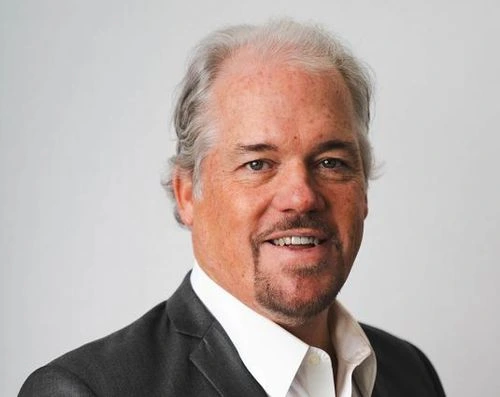
Thomas A. Doherty
Thomas A. Doherty is a Retirement Planning Consultant with more than 35 years of experience helping federal employees, academic professionals, business owners, and retirees make informed retirement decisions. His expertise includes federal benefits, pension planning, tax-efficient retirement strategies, and long-term retirement income planning. Thomas focuses on simplifying complex retirement topics so clients can better understand their options and make confident decisions about their financial future.

Download Federal Retirement: Step-by-step Checklist
This comprehensive guide will help you understand your federal benefits, optimize your savings, and plan for a comfortable future.
Recent Post's